
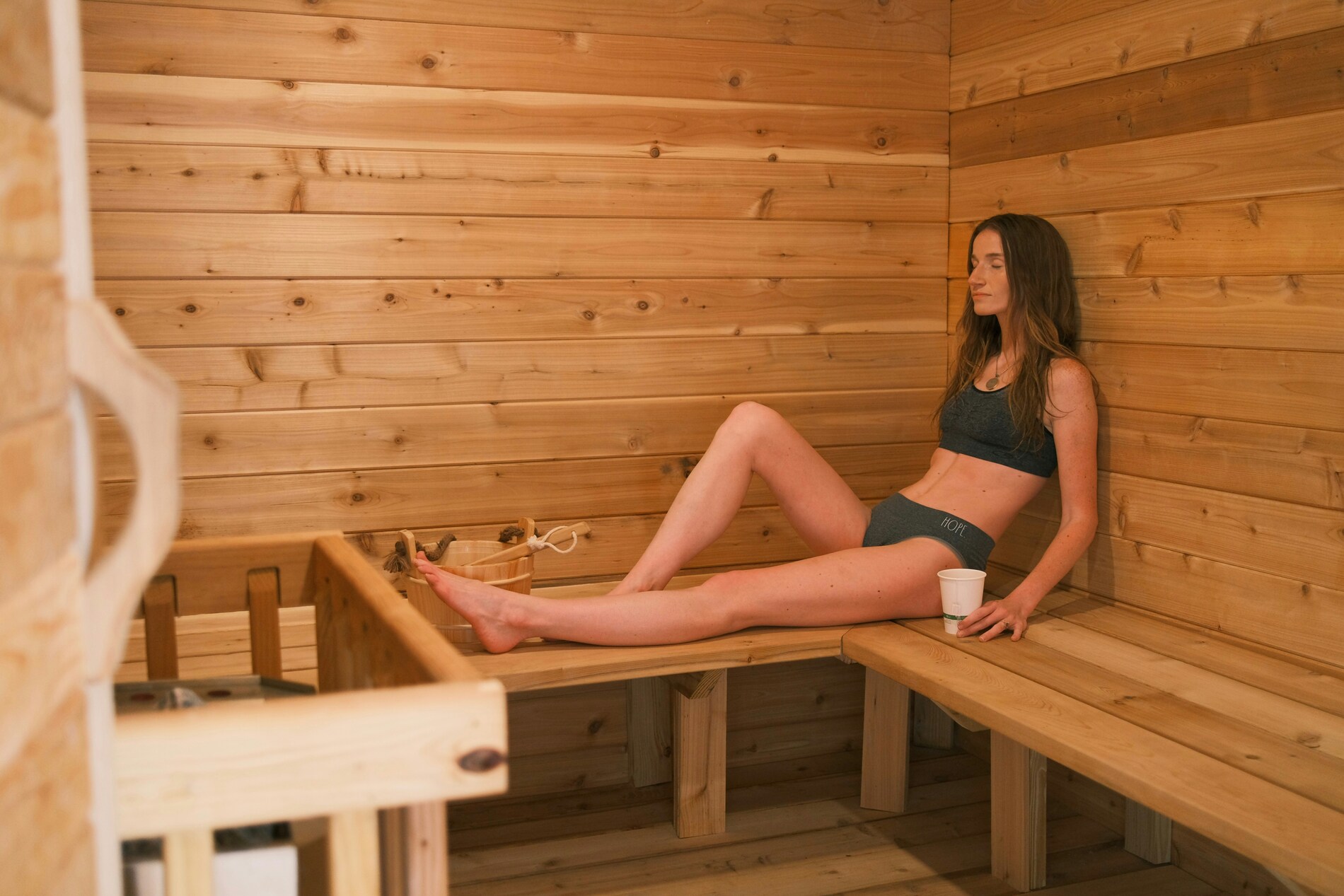
You’ve finished a brutal workout, your muscles are trembling slightly, and you’re standing in the gym locker room staring at two doors. To your left is the dry, cedar-scented heat of the traditional Finnish sauna. To your right is the thick, eucalyptus-infused fog of the steam room. Both promise relaxation, but if your goal is to give your cardiovascular system a genuine competitive edge, one of these doors is miles ahead of the other.
Most people treat heat therapy as a minor post-gym luxury—a simple way to sweat out yesterday’s bad decisions. But sitting in extreme heat isn’t just a physical reset; it’s an active cardiovascular workout disguised as complete stillness. The choice between dry and wet heat changes exactly how hard your heart has to work to keep you cool.
The Simulation of the Sprint
When you step into an environment that sits at 80°C or higher, your body panics in a very controlled way. To prevent your core temperature from rising to dangerous levels, your brain directs a massive amount of blood away from your internal organs and straight to your skin.
Your blood vessels dilate, and your heart rate rapidly climbs to 120 or even 150 beats per minute. Physiologically, your heart cannot tell the difference between sitting in a traditional dry sauna and crushing a moderate-intensity session on an exercise bike. This thermal stress trains your left ventricle to pump blood more efficiently and improves the elasticity of your arterial walls, effectively lowering your resting blood pressure over time.
Choosing Your Thermal Medicine
While both options make you sweat, the delivery mechanism matters immensely for your blood volume and heart performance.
- The Dry Sauna Advantage: Traditional dry saunas handle significantly higher temperatures (often between 80°C and 100°C) with very low humidity. This dry environment allows your sweat to evaporate instantly, which is how your body naturally cools down. Because you can safely stay inside longer, your heart gets a prolonged, steady cardiovascular workout that matches the data found in longevity studies.
- The Steam Room Barrier: Steam rooms operate at a lower temperature (around 40°C to 45°C) but hit 100% humidity. Because the air is completely saturated with moisture, your sweat cannot evaporate from your skin. You feel intensely hot very quickly, but this is an illusion of skin temperature. Your heart rate spikes faster due to the humidity barrier, making long-term cardiovascular conditioning harder to sustain without overheating.
- Respiratory vs. Vascular Focus: If your primary goal is clearing out tight sinuses or soothing an irritated throat, choose the steam room. If your goal is reducing your risk of a cardiovascular event, stick to the dry wood chamber.
Pro-Tip: The immense long-term heart benefits associated with saunas—like a 40% reduction in all-cause mortality—were discovered in studies tracking people who used dry Finnish saunas 4 to 7 times a week. The steam room simply doesn’t share that same clinical track record for your arteries.
Your First Step
To start exercising your heart without moving a muscle, plan your very first intentional sweat session.
After your next gym workout, commit to exactly 15 minutes in the dry sauna. Sit on the lower bench where the temperature is slightly more manageable, keep your breathing slow and nasal-only, and leave your phone in the locker. Step out immediately if you feel dizzy, and follow the session with a full 20 ounces of salted water. Make this a three-times-a-week ritual, and give your heart the endurance training it can only get by sitting still.