
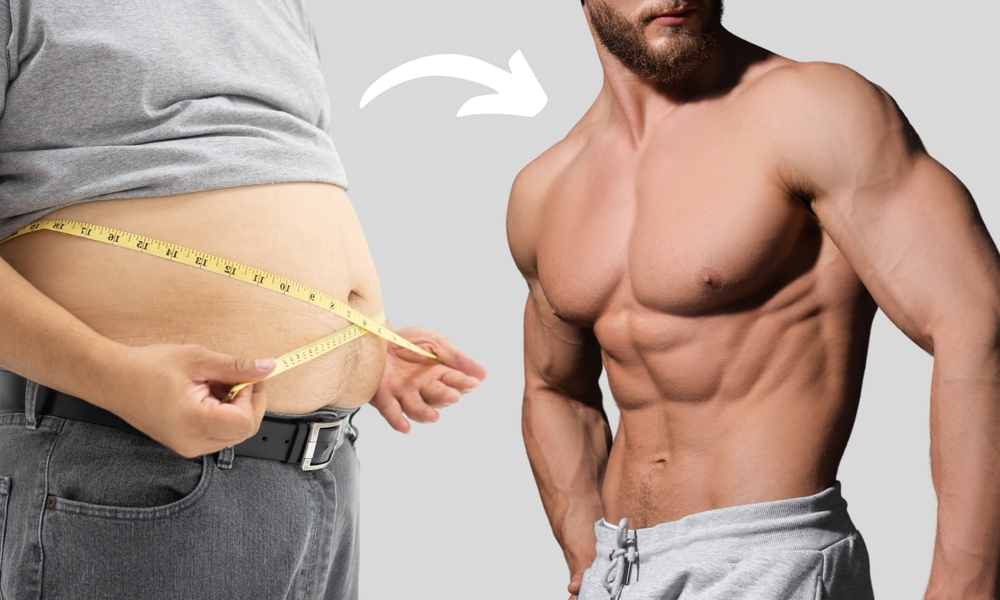
Learn the real science behind body recomposition and the exact protocol to make it happen for you.
Let me be straight with you. Most people in the gym are doing one of two things. Either they are eating in surplus and putting on size along with unwanted fat, or slashing calories and losing muscle.
Both approaches work on some level, but neither is optimal. There’s a smarter way, and it’s called body recomposition. It is the simultaneous process of losing body fat and building muscle mass.
Yes, you can build muscle and burn fat simultaneously. It’s not a myth. It’s physiology. But it requires precision in both your training and your nutrition.
How to Get Started?
First, understand what’s actually happening in your body.
Your body is never truly at rest metabolically. At every moment, it’s breaking tissues down (catabolism) and building them back up (anabolism). These two processes don’t cancel each other out. They’re constantly running in parallel, and the ratio between them is what determines your body composition over time.
What drives that ratio? Three things:
- Your hormones
- Your training stimulus
- Your nutritional state
Master these three levers, and you can tip the scales toward fat loss and muscle gain at the same time. To be precise, do a minimum of two strength training sessions per week, get 30% of calories from quality protein, and take 7–9 hours of sleep for optimal recovery.
The Four Pillars of Body Recomposition
Let’s now discuss the four pillars of body recomposition — each one amplifies the others. Nail all four together, and your body has no choice but to change.
1. Caloric Cycling
Here’s where most people get tripped up. You’ve heard that you need a calorie surplus to build muscle and a calorie deficit to lose fat. Both are true. The workaround is that you don’t have to be in the same state every single day.
Start by finding your maintenance calories (the number of calories your body burns on a rest day). From there, cycle your calorie intake according to your training:
- Strength training days
Eat 5–15% above maintenance. Prioritize protein and complex carbs to fuel muscle repair and growth.
- Cardio days
Eat at maintenance. This creates a mild deficit relative to total energy burned without compromising muscle.
- Rest days
Eat 5–10% below maintenance. Your body taps stored fat for energy when activity demand is low.
- Every day
Keep protein high regardless of calorie target. This is non-negotiable for preserving lean mass.
2. Strength Training
You cannot recompose your body without resistance training. Full stop! Cardio alone will reduce your weight, but it won’t reshape your physique. Muscles are the engine of your metabolism and the architecture of your body, so they must be trained.
Effective strength training for body recomposition should include short and intense sessions of 30–60 minutes, 6–12 reps per set targeting near muscle failure, and progressive overload over time.
That last part matters enormously — gradually increase your weights by no more than 10% per week to force continuous adaptation without risking injury.
The best compound movements are squats, deadlifts, lunges, push-ups, rows, and stair-climbing. These recruit the most muscle mass per movement and drive the biggest hormonal response.
3. Protein, the Most Important Macronutrient
When you’re in a calorie deficit, your body looks for energy wherever it can find it, including your own muscle tissue. A high protein intake is what signals your body to preserve and build muscle instead of breaking it down. Without adequate protein, even the best training is useless.
Distribute your protein evenly across meals. Your muscles can only synthesize a certain amount at once. Focus on these protein-dense foods:
- Chicken breast
- Turkey breast
- Eggs & egg whites
- Lean beef
- Cottage cheese
- Lentils & legumes
- Greek yogurt
- Fatty fish (salmon, tuna)
4. Intermittent Fasting
Intermittent fasting, particularly the Leangains 16/8 protocol (16 hours fasting, 8-hour eating window), is one of the most effective tools for body recomposition if used correctly.
Why?
During the fasting window, insulin levels drop and remain low. This improves your body’s insulin sensitivity, which directly promotes muscle building and fat mobilization.
Simultaneously, growth hormone (somatropin) levels rise during fasting and during sleep. It is a powerful anabolic driver for muscle growth and fat burning.
The strategic move is to train at the tail end of your fasting window, then break your fast with your largest meal immediately after. This triggers the insulin spike and testosterone for maximum hormonal synergy.
One important caveat: Research shows that eating a high-carb meal right before training can suppress fat burning by up to 35%. If you’re doing intermittent fasting, train fasted or in a near-fasted state for maximum fat oxidation.
Recovery: The Most Overlooked Variable
Your muscles don’t grow during training. They grow during recovery. Training is just the stimulus. The adaptation happens while you rest.
1. Sleep (7–9 hours minimum)
Growth hormone is primarily released during deep sleep. Hence, cutting sleep short is literally cutting your muscle-building window short. High-performance athletes may need closer to 10 hours.
2. Rotate muscle groups
Never train the same muscle group two days in a row. Give each muscle 48–72 hours of recovery before training it again.
3. Post-workout nutrition
Eat your biggest protein-rich meal after training. This is when muscle protein synthesis is highest and your body is primed to use nutrients for repair.
When Will You See the Results and What Will They Look Like
Body recomposition is not a 4-week challenge. It’s a long-term lifestyle shift. Because you’re pursuing two physiological goals at once, progress is slower than if you were doing one or the other exclusively. But the results are sustainable, and you won’t go through the brutal cycles of bulking and cutting that leave many gym-goers frustrated.
The Bottom Line
Body recomposition works for everyone, from competitive athletes to beginners just getting started. And the formula isn’t complicated, but it demands consistency. Train with resistance at least twice a week. Keep protein-rich food at priority. Cycle your calories intelligently. Sleep like it’s your job. Give this technique months, not weeks, and the body you want is absolutely within reach.