The world is going green, and not just in the environmental sense. Plant-based protein is having a serious moment. According to the International Food Information Council’s 2022 Food and Health Survey, 12% of Americans now follow a plant-based diet, and 31% say they’ve been eating more whole-plant foods. That’s not a trend. That’s a shift.
But with seemingly endless options of meat substitutes and alt-milks hitting shelves every month, figuring out what’s actually worth eating is confusing. So let’s cut through the noise.
What the Science Says: Is Plant Protein as Good as Meat?
Short answer? Yes — mostly.
For years, the biggest knock against plant-based protein was the “complete protein” concern. Complete proteins contain all nine essential amino acids your body can’t produce on its own. Since many plant proteins don’t tick every box on that list, people assumed they had to carefully mix and match foods to fulfill their bodies’ needs.
Turns out, that worry has been largely overblown. A 2019 study found that people on vegan and vegetarian diets received more than adequate protein and amino acids.
The researchers went so far as to say that the concept of amino acid deficiency has been substantially overstated. So you can breathe easy that a diverse, well-balanced plant-based diet will almost give your body what it needs.
But there is one exception. Plants can’t fully compete with Vitamin B12. It is essential for brain function and red blood cell formation and is naturally found in meat. If you’re going fully vegan, you should take B12 supplements.
The Health Benefits Are Real
Going plant-based isn’t just a feel-good choice. The research backs it up. Studies have linked plant-based diets to healthy weight maintenance, a lower risk of type 2 diabetes, and even a longer life. The reward is not bad for eating more beans and tofu.
And that soy scare you’ve heard about? Put it to rest. A 2020 study tracking over 300,000 women found that eating soy foods actually reduced the risk of developing breast cancer. The American Cancer Society agrees as well that soy is both healthy and safe.
Watch Out for These Pitfalls
Like any diet, plant-based food comes with its own set of landmines. Knowing where they are makes all the difference.
1. Ultra-Processed Foods
Not all plant-based products are created equal. That sleek, plant-based burger at the grocery store might be packing just as much sodium and saturated fat as its meaty counterpart.
“Depending on the type, the sodium and saturated fat content could be comparable or even higher than meat,” says Christine Milmine, RDN, founder of Plant Powered You. “Always check the nutrition facts panel.”
Plant-based dietitian Amy Gorin, MS, RDN, agrees: enjoy those plant-based meat options in moderation, not with every single meal. They’re a fun addition, not a daily staple.
2. Allergies and Digestive Sensitivities
Soy and nuts are two of the eight most common food allergens, and they also happen to be popular plant protein sources. If you have known sensitivities, always read ingredient labels carefully.
Similarly, people with irritable bowel syndrome or digestive issues may need to ease into higher-fiber plant foods rather than going all-in overnight.
The Best Plant-Based Protein Sources
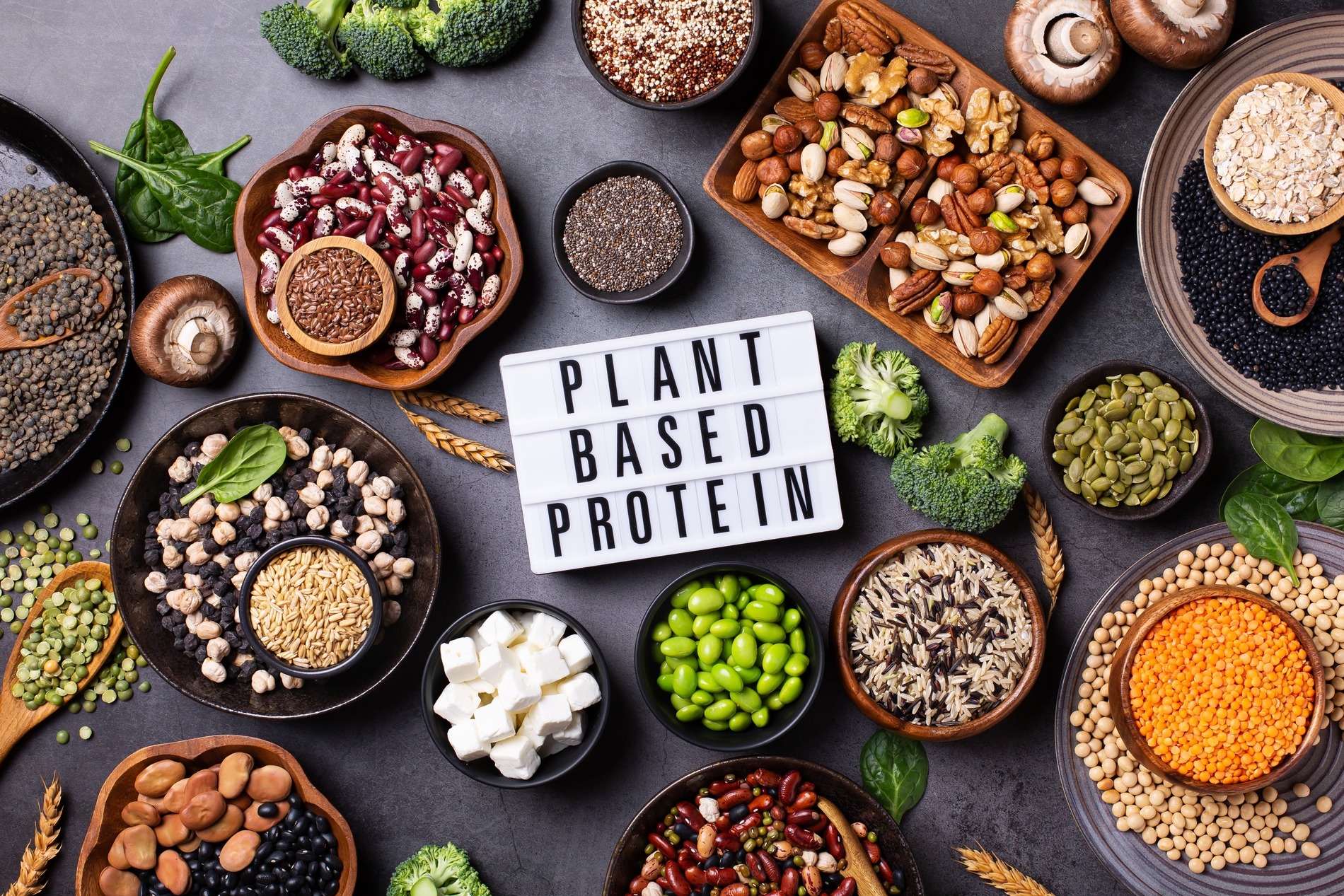
Here’s how some of the most popular plant protein options stack up per serving:
| Food | Serving | Protein | Calories | Fiber |
| Vital wheat gluten (seitan) | ¼ cup | 21g | 104 | 0.2g |
| Pea protein powder | 1 scoop (22g) | 19g | 100 | 0g |
| Tofu (extra-firm) | 3.5 oz | 10.6g | 94 | 1.2g |
| Edamame | ½ cup | 9.2g | 94 | 4g |
| Lentils | ½ cup | 9g | 115 | 8g |
| Quinoa (cooked) | 1 cup | 8.1g | 222 | 5.1g |
| Black beans | ½ cup | 7.5g | 114 | 15g |
| Peanut butter | 2 tbsp | 7.1g | 191 | 1.4g |
| Chickpeas | ½ cup | 6g | 105 | 5.3g |
| Oats | ½ cup | 5.3g | 153 | 4g |
Is Plant-Based Protein Powder as Effective as Whey?
The plant protein powder vs. whey debate is ongoing, and honestly, it totally depends on your goals and your gut.
Both types support muscle building and weight loss. Whey, derived from cow’s milk, generally offers a complete amino acid profile and a higher protein-per-scoop ratio. But plant-based powders have their own edge. They’re lactose-free (easier on digestion for many people), and the obvious choice if you’re avoiding animal products altogether.
Choose the one you’ll actually drink. With pea protein, brown rice protein, and countless blended options on the market in flavors from chocolate to vanilla bean, there’s no reason to choke down something that tastes like chalk.
The Planet Says Thank You
The environmental edge for eating more plant protein is staggering. You don’t have to go fully plant-based to make a difference; even small swaps add up.
A 2019 study found that shifting from an omnivore diet to veganism cut personal greenhouse gas emissions by 50%. Even switching to a lacto-ovo-vegetarian diet brought them down by 35%. And water? The water footprint of pulses like lentils and chickpeas is 6x lower than that of beef.
The Bottom Line
Plant-based proteins aren’t a compromise. They’re legitimate, science-backed, and environmentally safe.
To start, stick to whole, minimally processed sources as your foundation, such as beans, lentils, tofu, edamame, nuts, and whole grains. Use plant-based meats and convenience foods as the occasional treat, not the centerpiece. Supplement B12 if you’re going fully vegan. And don’t stress about “complete proteins,” just eat a wide variety of plants and let the nutrition take care of itself.
Your body will feel the difference. So will the planet.