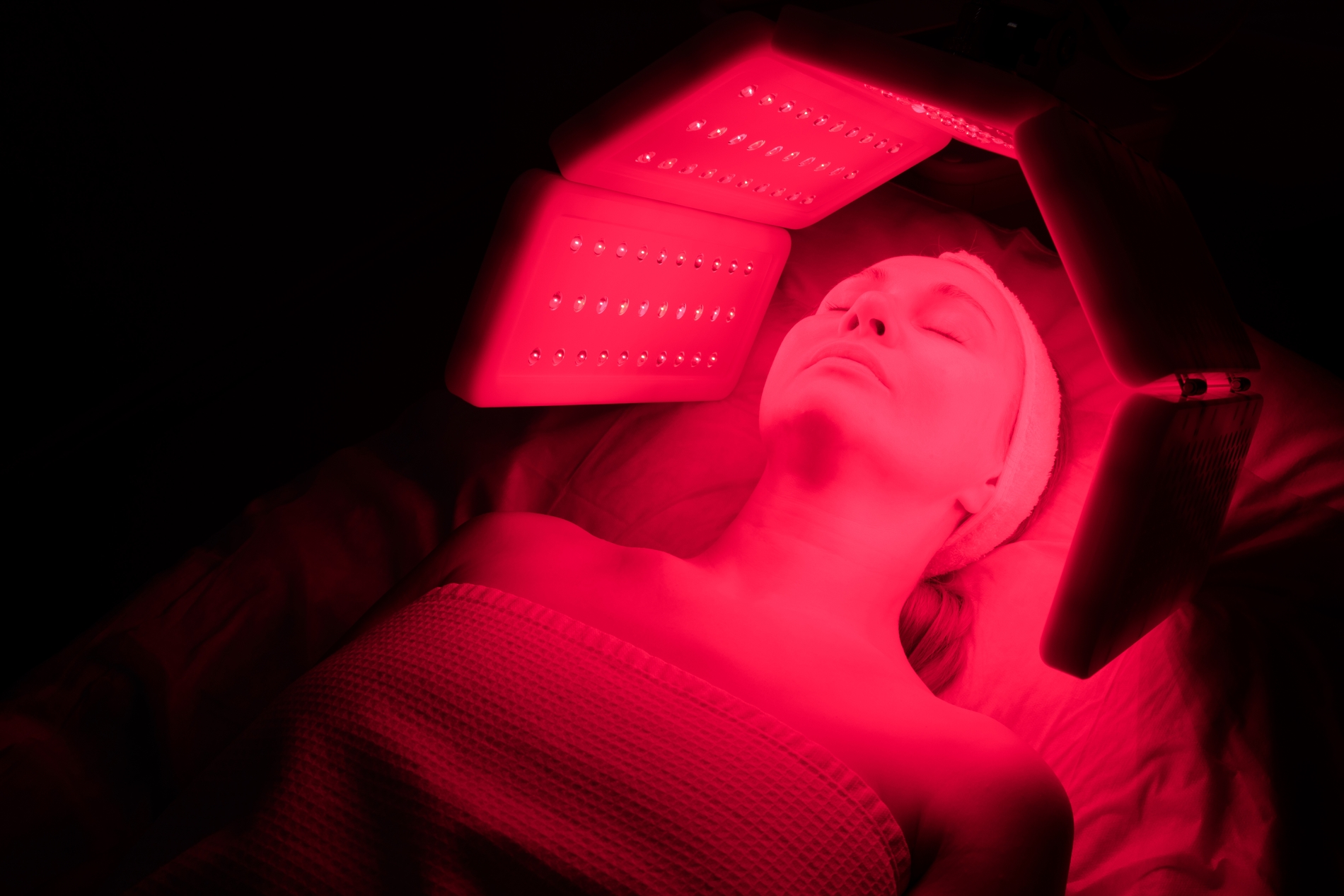
You stand half-naked in front of a glowing, sci-fi-looking panel, bathing your sore quads in a deep crimson glare that makes your bedroom look like a photo-developing lab. Your neighbors probably think you’ve joined a strange new cult.
If you have spent any time on wellness social media lately, you’ve seen athletes staring intently into these crimson LED arrays. It looks like an expensive gimmick, and skepticism is a healthy first reaction.
Paying hundreds of dollars to bask under specialized light bulbs sounds absurd. But photobiomodulation—the formal scientific term for red light therapy—isn’t just a trendy Instagram aesthetic. Behind the glowing panels sits some surprisingly solid cellular biology that can genuinely cut down your post-workout downtime.
The Cellular Solar Panel
Your muscles don’t actually recover because of time; they recover because of cellular energy. Deep inside your muscle cells sit tiny powerhouses called mitochondria, which produce adenosine triphosphate (ATP)—the fuel your body uses to repair damaged tissue.
Red and near-infrared light wavelengths (specifically between 660 and 850 nanometers) pass right through your outer skin layer and hit those mitochondria directly. The light stimulates a key enzyme that kicks cellular respiration into high gear, flooding your fatigued muscles with extra ATP. More cellular energy means faster tissue repair, reduced oxidative stress, and significantly less delayed-onset muscle soreness (DOMS) after a brutal training session.
How to Integrate Light into Your Recovery
If you want to test red light therapy without wasting your time or money, follow these operational guidelines:
- Target the Right Spectrum: Look for devices that emit dual wavelengths: 660 nm (red light for skin surface and shallow tissue) and 850 nm (near-infrared light to penetrate deep into muscle belly and joint capsules).
- Position for Distance: Stand roughly 15 to 30 cm away from the panel. Sitting too far away dilutes the light intensity, rendering the session useless for deeper muscle tissue.
- Timing is Everything: Aim for 10 to 15 minutes per targeted muscle group. Exposure longer than 20 minutes actually yields diminishing returns as cellular receptors become temporarily saturated.
- Prioritize Direct Skin Contact: Do not wear thick leggings or compression sleeves. Light cannot penetrate heavy fabrics, so expose the target area completely.
Pro-Tip: Time your session before heavy workouts for a performance boost. While most people use red light for post-workout repair, shining near-infrared light on your prime movers 15 minutes before hitting the gym increases localized blood flow and pre-charges your mitochondria, helping your muscles resist early fatigue.
Your First Step: The 24-Hour Upgrade
You don’t need to drop a small fortune on a full-body commercial panel today. Let’s test the concept on a smaller scale over the next 24 hours.
In the next 24 hours: Book a single 15-minute trial session at a local recovery lounge, biohacking clinic, or gym equipped with medical-grade light panels. Target your sorest muscle group immediately following your next workout. Track how those muscles feel 24 hours later compared to your usual recovery timeline—your legs will give you an honest answer.