You proudly load your plate with a massive mound of black beans, brown rice, and steamed broccoli, confident you just hit your protein goals for the afternoon. But two hours later, your energy plunges, your stomach feels strangely empty, and your post-workout recovery feels entirely stalled.
Getting enough total plant protein on paper is relatively easy. The real hurdle is getting your body to actually use it for muscle repair.
If you constantly hear that plant-based protein is “incomplete” or inferior for athletic performance, it isn’t because plants lack strength. It is simply because most plant foods lack a full suite of essential amino acids in a single serving. With a few deliberate culinary pairings, you can seamlessly construct a complete amino acid profile without touching a single egg or chicken breast.
The Biological Puzzle of Plant Proteins
Your muscle tissue relies on nine essential amino acids—the fundamental building blocks your body cannot manufacture on its own. Animal proteins deliver all nine in a neat, pre-packaged ratio.
Most grains are low in the essential amino acid lysine but rich in methionine, while most legumes are packed with lysine but fall short on methionine. When you eat them in isolation, your body hits a rate-limiting bottleneck, using only a fraction of the available protein for tissue repair. Combining complementary plant sources solves this instantly. You create a complete biological protein that stimulates muscle protein synthesis just as effectively as whey or poultry.
Strategic Plant-Based Protein Combos
To hit a complete amino acid profile effortlessly throughout your day, build your meals around these four powerful pairings:
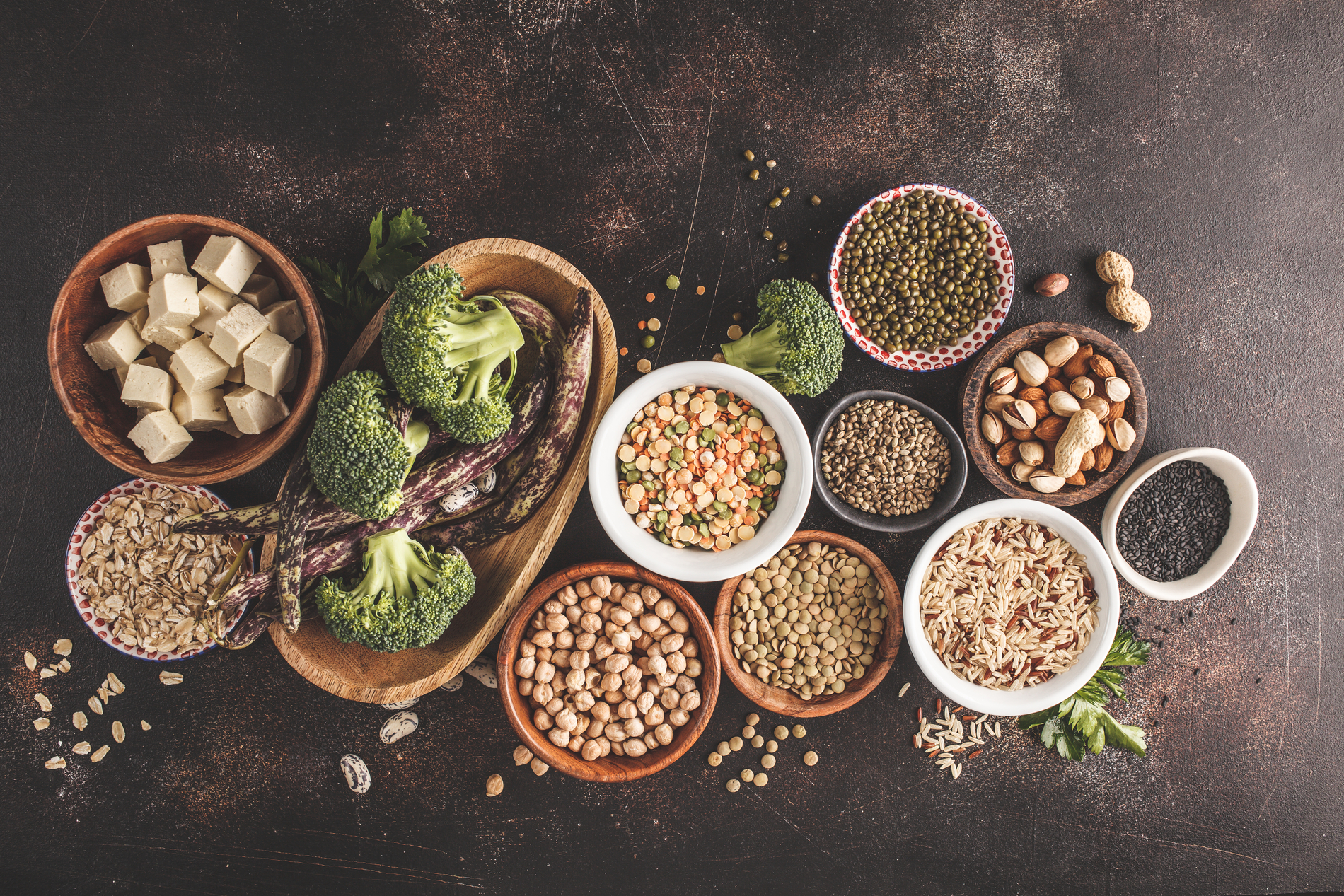
- Legumes + Whole Grains (The Classic Anchor): Pair black beans with brown rice, or spread warm hummus over a slice of sprouted sourdough bread. The grain fills the methionine gap while the chickpeas or beans supply high-dose lysine.
- Nuts + Seeds + Green Vegetables: Sprinkle toasted hemp seeds and slivered almonds over a bowl of roasted Brussels sprouts or dark leafy greens. Hemp seeds are one of the rare plant foods that contain all nine essential amino acids on their own.
- Soy + Whole Grains: Stir organic edamame or pan-seared tempeh into a bed of cooked quinoa or farro. Soy offers a naturally complete profile, and pairing it with ancient grains increases total leucine—the primary driver of muscle recovery.
- Seitan + Lentils: Combine wheat-gluten-derived seitan with cooked brown lentils in a savory stew. This creates a dense, meat-like texture with a massive amino acid count per serving.
Pro-Tip: You do not need to eat complementary proteins in the exact same bite. Old-school nutrition advice insisted that you had to pair beans and rice simultaneously, but your liver maintains an amino acid pool for roughly 24 hours. As long as you vary your plant sources across your daily meals, your body will assemble complete proteins automatically.
Your First Step: The 24-Hour Upgrade
Upgrading your plant-based nutrition doesn’t require a total overhaul of your kitchen cabinets. Let’s make one smart tweak to your next meal.
In the next 24 hours: Take a look at your lunch or dinner plan. If you are serving a single-source plant protein—like a simple bowl of lentil soup or plain oatmeal—add two tablespoons of shelled hemp seeds or a side of sprouted grain bread. This tiny addition instantly rounds out your amino acid spectrum and keeps your recovery running at peak capacity.