
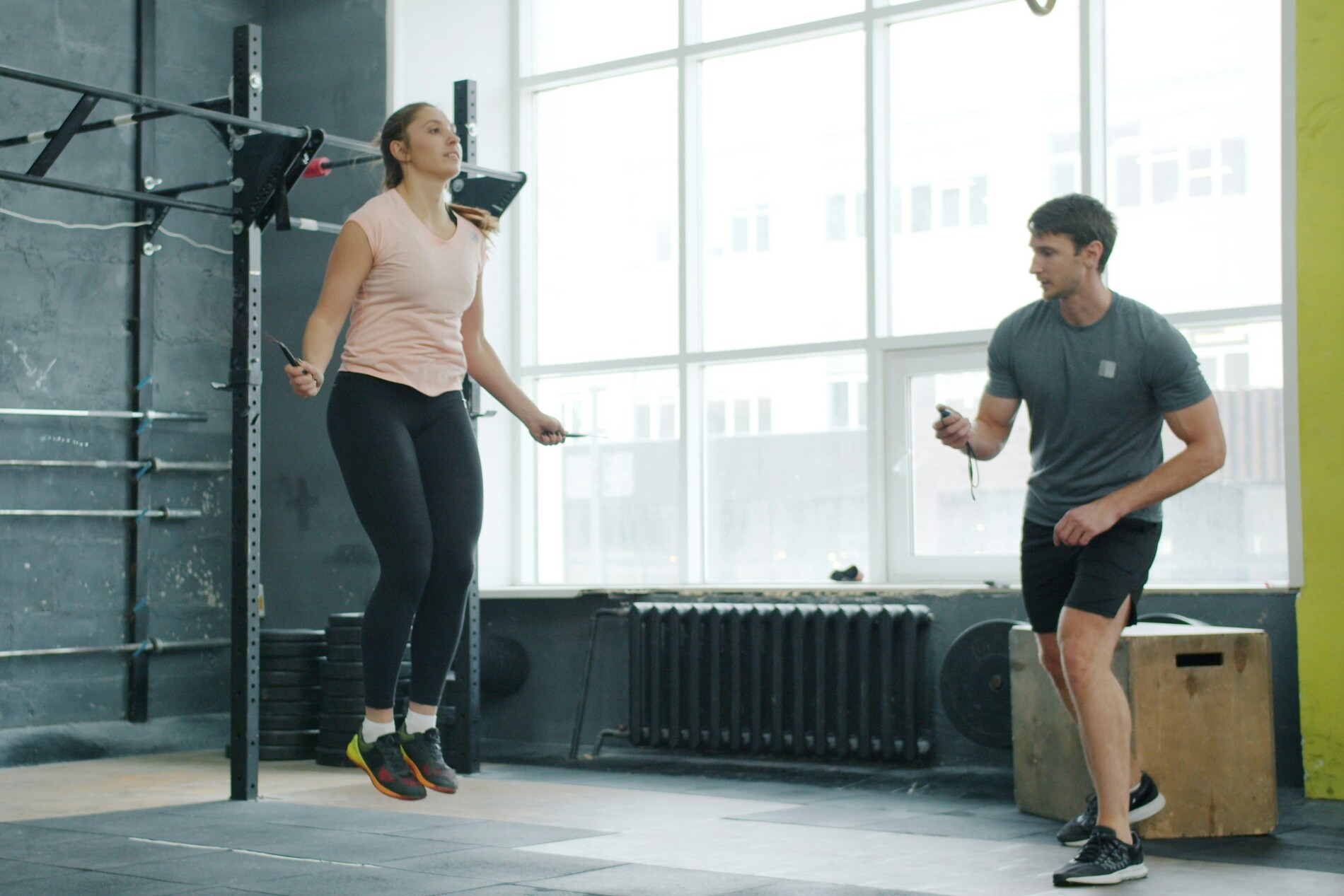
The moment you turn forty, any mention of plyometrics usually conjures up terrifying images of twenty-somethings leaping onto wooden boxes the height of a dining room table. You can practically hear your knees groaning at the thought.
So, you stick strictly to low-impact steady cardio, assuming high-velocity jumping is a young athlete’s game that your cartilage simply cannot afford.
That protective instinct is completely understandable, but shunning explosive movement entirely actually accelerates the exact frailty you are trying to avoid. You do not need to leap over tall buildings to stay agile. By introducing low-amplitude, low-impact jumping drills into your routine, you can train your tendons to act like youthful springs without risking an emergency room visit.
The Aging Muscle Trap
As we age, we do not just lose muscle mass; we lose fast-twitch muscle fibers at nearly double the rate of slow-twitch fibers. These explosive motor units govern your balance, reaction speed, and ability to catch yourself if you trip over a curb.
Standard weightlifting builds raw strength, but plyometrics train speed and force development. Impact forces, when controlled, send a sharp electrical signal through your skeletal system that stimulates bone mineral density far more effectively than traditional walking. Controlled jumping retrains your nervous system to absorb kinetic energy safely, preserving bone mass and protecting your hips, ankles, and knees against daily wear and tear.
Safe Joint-Friendly Plyometric Drills
To build explosive power without destroying your joints, stick to these low-impact progressions:
- Pogo Hops (Ankle Stiffness): Stand tall and bounce lightly on the balls of your feet, keeping your knees almost completely straight. Think of yourself as a stiff pogo stick, clearing the floor by only 2 to 3 cm.
- Low Box Step-Offs (Deceleration Training): Stand on a low curb or a 15 cm step. Step off smoothly and land softly on both feet in a mini-squat position, absorbing the ground impact like a shock absorber.
- Med Ball Slam Jumps (Explosive Upper Body): Reach a light medicine ball high overhead, rise onto your toes, and drive the ball into the floor with maximum force. This builds explosive kinetic power without any lower-body landing stress.
- Broad Jumps into Soft Landings: Jump forward horizontally across a carpeted floor, focusing entirely on a whisper-quiet landing rather than maximum distance.
Pro-Tip: Focus on landing volume, not air time. The primary benefit of plyometrics for mature adults happens during the deceleration phase—the instant your feet hit the floor. Always land with bent knees, a hinged hip, and flat feet. If your feet slap loudly against the ground, you are taking the impact in your lumbar spine rather than your glutes.
Your First Step: The 24-Hour Upgrade
You do not need an arsenal of plyometric boxes or specialized footwear to start building tendon resilience today. Let’s run a thirty-second assessment in the next 24 hours.
Tomorrow morning: Kick off your shoes, stand on a carpeted floor, and perform exactly ten gentle pogo hops. Focus on staying light on the balls of your feet and making as little sound as possible. Notice how your calves and achilles tendons fire up to absorb the ground force. Add two quick sets before your next strength workout to keep your movement crisp and elastic.