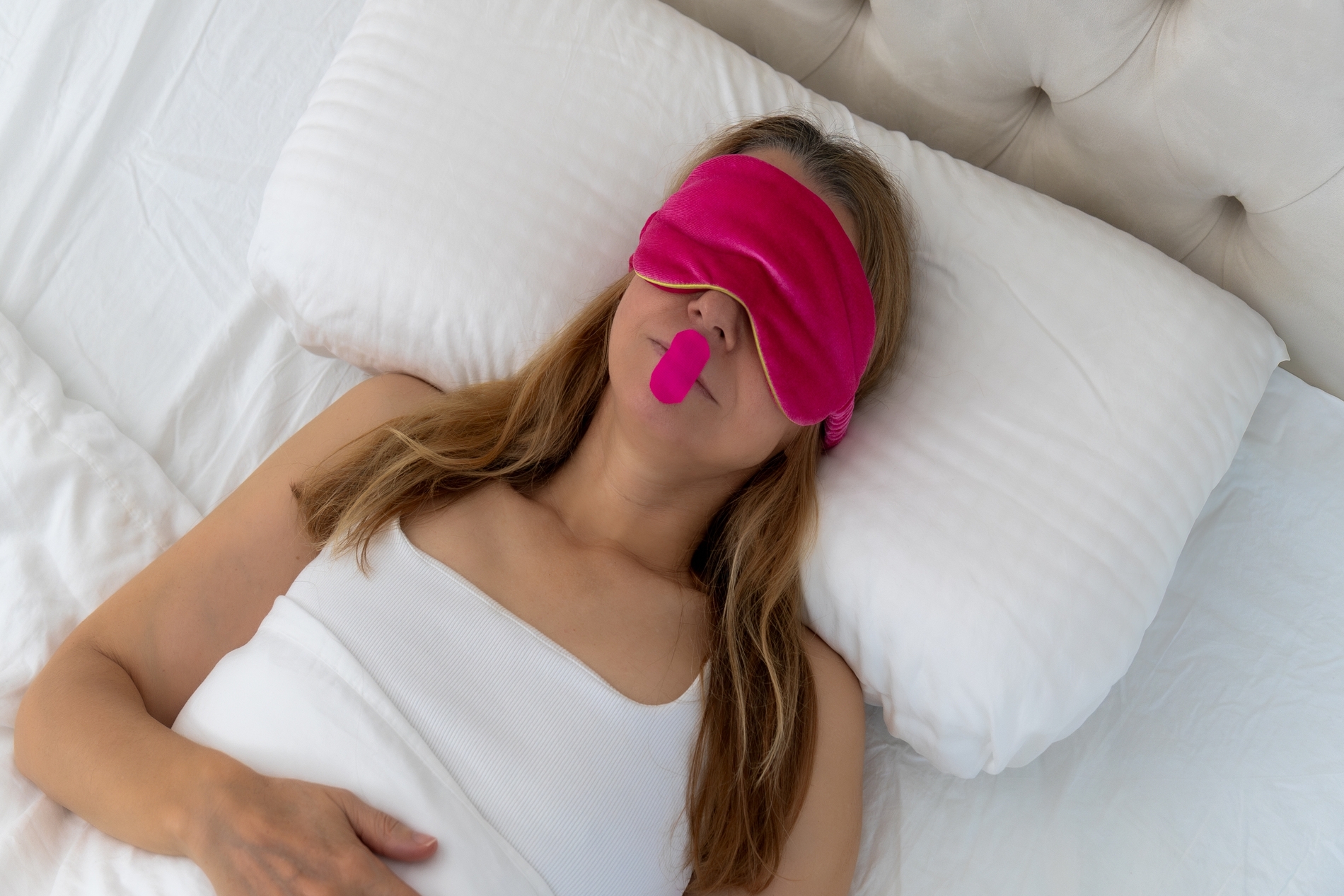
Imagine looking at your sleeping partner only to realize they have a small piece of medical tape pasted firmly over their lips. Your initial instinct might be to wonder if you have stumbled into a low-budget thriller.
Instead, you are witnessing the internet’s favorite, most polarizing sleep trend: mouth taping.
Waking up with a cotton-dry mouth, an unexplained headache, and the distinct feeling that you just ran a marathon during an eight-hour sleep cycle is an exhausting routine. If this sounds familiar, you are likely a chronic nighttime mouth-breather. While the social media imagery of taping your mouth shut looks absurd, the physiological benefits of forcing nasal breathing while you sleep are difficult to ignore.
The Low-Oxygen Cost of Mouth Breathing
Human beings were structurally designed to breathe through their noses. When you switch to open-mouth breathing at night, you bypass your body’s built-in filtration and humidification system.
Breathing through your mouth causes cold, dry air to hit your lungs, which triggers mild airway inflammation and shallower breathing. This inefficient gas exchange actually lowers your overall blood-oxygen saturation levels during the night, dragging you out of deep, restorative sleep cycles. By forcing your body to rely solely on your nasal passages, you stimulate the parasympathetic nervous system, lower your resting heart rate, and maximize the amount of oxygen your blood carries to your recovering muscles and brain.
How to Safely Transition to Mouth Taping
If you want to try this trend without the claustrophobia, follow this methodical setup:
- Source the Right Material: Never use duct tape, packing tape, or heavy household adhesives. Buy a roll of gentle, porous medical paper tape or specialized kinesiology sleep strips designed specifically for skin.
- Test the Waters Awake: Before turning the lights off, apply a small strip of tape horizontally across your lips while reading or watching television for 15 minutes. This conditions your brain to realize it can get plenty of air through your nose.
- The Minimalist Strip Method: You do not need to seal your lips from corner to corner like a hostage. Apply a single, vertical strip of tape right over the center of your lips. This leaves the sides open, allowing you to breathe or cough if you absolutely need to.
- Prep the Surface: Apply a small dab of lip balm before taping. This protects the sensitive skin of your lips and ensures a painless, smooth removal when your alarm goes off.
Pro-Tip: If you have a severe cold, an active sinus infection, or suspect you suffer from untreated sleep apnea, skip the tape entirely. Mouth taping is a tool to correct a lazy breathing habit, not a cure for a structurally blocked airway. Always clear your nasal passages with a saline spray before attempting to seal your lips.
The 24-Hour Upgrade
You do not need to commit to a full night of taped sleep to start retraining your airways. Let’s take an easy first step today.
In the next 24 hours: Pick up a roll of hypoallergenic medical paper tape from your local pharmacy. Tonight, sit on the edge of your bed and apply a single vertical strip over your lips for just ten minutes before you lie down. Focus on taking slow, deep belly breaths entirely through your nose. If it feels comfortable, leave it on for your first hour of rest; if not, peel it off and try again tomorrow. Your lungs will thank you.