You complete a five-kilometer run, step off the pavement onto your porch, and immediately feel a tight, uncomfortable pinch at the front of your hips. You try to take a deep stride forward or drop into a light cool-down stretch, but your hip flexors feel like stiff, overwound steel cables holding your pelvis hostage.
It is an all-too-common frustration for runners: hitting your distance targets only to spend the rest of the day walking with a locked-up, rigid stride.
Running is an intensely linear, repetitive sport. Every single stride requires your primary hip flexors—the iliopsoas and rectus femoris—to contract forcefully to pull your leg forward, thousands of times per session. When you pair those repetitive micro-contractions with hours of sitting at a desk, your hip flexors adaptively shorten. This chronic tightness pulls your pelvis into an anterior tilt, dumping excess stress into your lower back and severely restricting your glute activation, effectively robbing you of your running power.
The Biomechanics of Pelvic Freedom
To unlock real stride efficiency, you must do more than passively pull on a tight muscle. You need to reset the biological tension in your pelvic bowl.
Your hip flexors connect your femur directly to your lower spine and pelvis. When these muscles remain perpetually shortened, they act as a physical brake on your posterior chain. By using targeted yoga postures that combine active glute engagement with deep hip extension, you trigger reciprocal inhibition—a neurological mechanism where contracting the glutes forces the opposing hip flexors to automatically relax. Opening your hips improves your hip extension, allowing your trailing leg to push off the ground far more efficiently with every stride.
The 5-Pose Hip-Opening Flow for Runners
Incorporate these five targeted yoga postures into your post-run routine to open tight hips and restore pelvic balance:
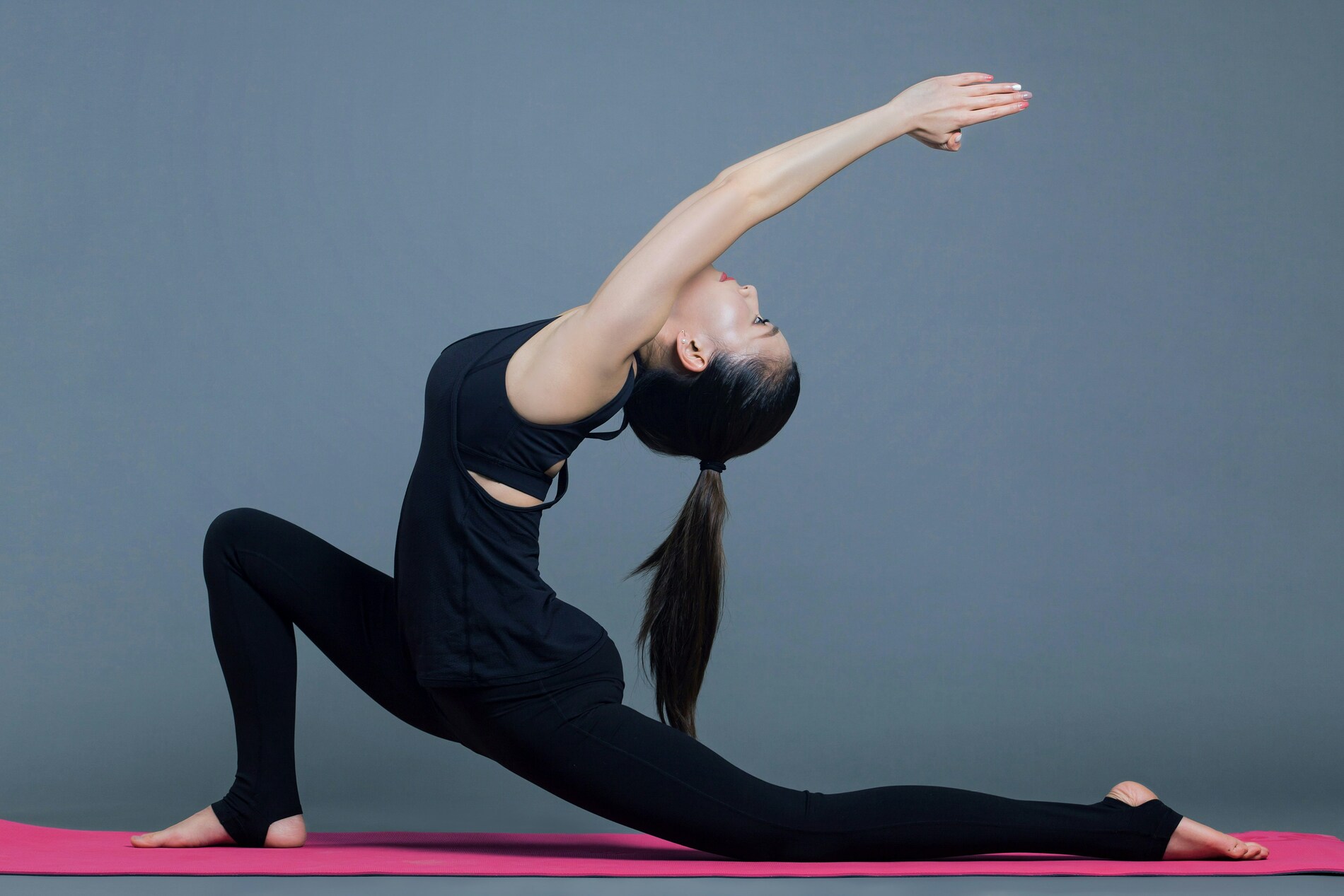
- The Low Lunge (Anjaneyasana): Drop your back knee to the mat, stack your front knee directly over your ankle, and tuck your tailbone slightly under. Press your hips forward while squeezing the glute of your back leg to drive a deep, targeted stretch into the iliopsoas.
- Crescent Lunge (Ashta Chandrasana): Lift your back knee off the mat into a high lunge while keeping your back leg active and heel high. Reach your arms overhead and sink into your hips, lengthening the entire frontal chain from your core down through your back quad.
- Lizard Pose (Utthan Pristhasana): From a low lunge, place both hands on the inside of your front foot. Slowly wiggle your front foot outward to the edge of your mat and lower onto your forearms or a block to unlock deep rotational tightness in your hip socket.
- Half Pigeon Pose (Eka Pada Rajakapotasana): Bring your front shin parallel to the front of your mat and extend your back leg straight behind you. Keep your hips square to the floor as you fold forward, releasing chronic tightness across your glutes, piriformis, and outer hip capsule.
- Reclined Hero Pose (Supta Virasana): Kneel on the floor with your knees together and feet wide enough to sit your hips between them. Slowly lean back onto your forearms to deliver an intense, targeted stretch through the rectus femoris muscle running down the front of your thigh.
Pro-Tip: Squeeze the glute of the target hip. Never passively sink into a deep hip-flexor stretch without active muscular engagement. Actively flexing the glute of the back leg while holding poses like Low Lunge or Crescent Lunge protects your lower back from hyperextending and forces the front of your hip to relax much faster.
Your First Step: The 24-Hour Upgrade
You do not need to attend a full 60-minute studio yoga class to rescue your hips after a tough workout. Let’s execute a quick two-minute post-run reset today.
After your next run or workout: Spend exactly 60 seconds per side holding a controlled Low Lunge. Keep your back knee on a soft surface, actively tuck your tailbone, and squeeze the glute of your back leg for five slow, four-second belly breaths. Notice how immediately your stride opens up and how much lighter your lower back feels as you walk away.