You’re standing over a barbell, your legs are ready to pull a personal record, but the moment you lift, your fingers start to feel like they’re made of wet noodles. It’s a specific kind of physical betrayal. We obsess over the “mirror muscles”—the quads, the chest, the biceps—yet we consistently ignore the literal link that connects our strength to the world. If you can’t hold it, you can’t lift it. But more importantly, if you can’t hold it, your heart might be trying to tell you something.
It sounds like a stretch, but grip strength is one of the most statistically significant predictors of how long you’re going to live. Epidemiologists have found that a weak grip is strongly correlated with an increased risk of cardiovascular disease and all-cause mortality. Your hands are essentially a biological dipstick; they measure the overall health of your muscular and nervous systems. When your grip is robust, it’s a sign that your body is maintaining its structural integrity. When it’s failing, it’s often an early warning sign of systemic aging.
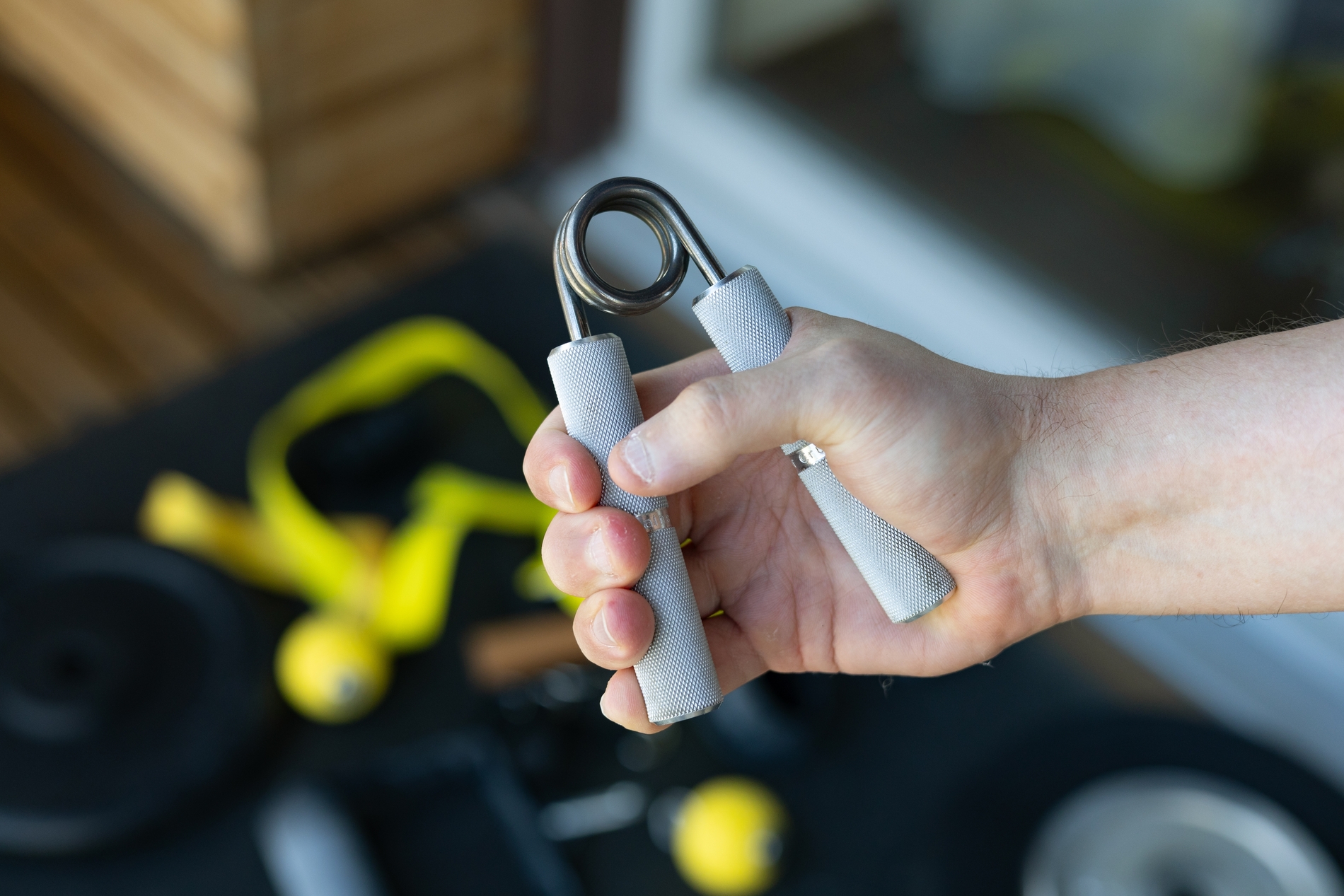
To turn your hands into iron clamps and give your heart a longevity boost, you don’t need fancy gadgets. You just need to stop relying on lifting straps and start challenging your forearms.
- Farmer’s Carries: Grab the heaviest pair of dumbbells you can find and walk for 40 meters. Keep your chest up and your shoulders packed. If you aren’t fighting to keep your fingers closed by the end, the weight is too light.
- Dead Hangs: Jump up to a pull-up bar and just… hang. Aim for a full 60 seconds. This has the added benefit of decompressing your spine after a day of sitting at a desk.
- Plate Pinches: Take two 10-pound plates and sandwich them together, smooth sides facing out. Hold them with just your fingers and thumb for as long as possible. This builds “pinch” strength, which is often the weakest link in a grip.
- Towel Hangs: Drape a sturdy gym towel over a pull-up bar and hang from the ends of the towel. The thickness and the unstable surface force your hand muscles to fire in ways a standard bar never could.
- The “Final Hold”: On your very last rep of any pulling exercise—rows, pull-ups, or deadlifts—hold the weight at the peak of the movement for an extra 10 to 15 seconds.
Pro Tip: Don’t over-train your grip every single day. The small muscles in your hands and the tendons in your elbows need recovery just like your glutes do. Treat grip work like a finishing move at the end of two or three workouts a week.
Rather than overhauling your entire routine, let’s focus on the next 24 hours. The next time you carry the groceries from the car, don’t loop the bags over your wrists like a pack mule. Grip the handles firmly in your palms, keep your arms at your sides, and walk with intention. It’s a small, slightly ridiculous-looking adjustment that turns a mundane chore into a longevity-boosting habit. Your heart—and your deadlift—will thank you.