If you want stronger arms, broader shoulders, and a more powerful upper body without overcomplicating your routine, push-pull training might be exactly what you need. This method divides workouts into two simple categories—pushing and pulling movements—so you can train smarter, recover properly, and build balanced strength. Instead of isolating one small muscle at a time, push-pull workouts group muscles based on how they function together. The result is efficient training, reduced injury risk, and steady strength gains.
Push exercises focus on movements where you press weight away from your body. These primarily target your chest, shoulders, and triceps. Pull exercises involve drawing weight toward your body, activating your back, biceps, and forearms. Separating these movements into different days allows each muscle group at least 48 hours to recover, which supports muscle growth and reduces overuse injuries. Beginners can start with four sessions per week, alternating push and pull days with rest in between for optimal recovery.
Push Exercises for Strength and Power
Push workouts help develop pressing strength and build definition in the chest, shoulders, and arms. These exercises form the foundation of a strong and capable upper body.
1. Push-Ups
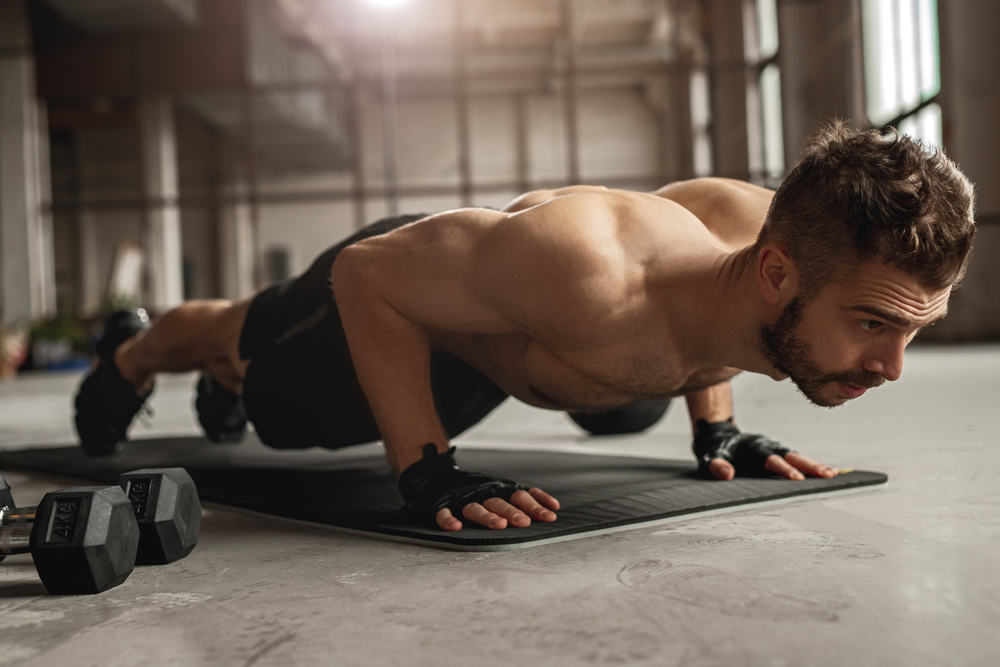
Push-ups are a classic bodyweight exercise that strengthens your chest, shoulders, triceps, and core all at once. To perform one, begin in a plank position with your hands shoulder-width apart and your body in a straight line from head to heels. Lower yourself by bending your elbows while keeping your core tight and hips aligned, then press back up as though you are pushing the floor away. Aim for 10 to 12 repetitions. If a full push-up feels too challenging, you can modify by dropping to your knees or performing the movement against a wall.
2. Overhead Tricep Press
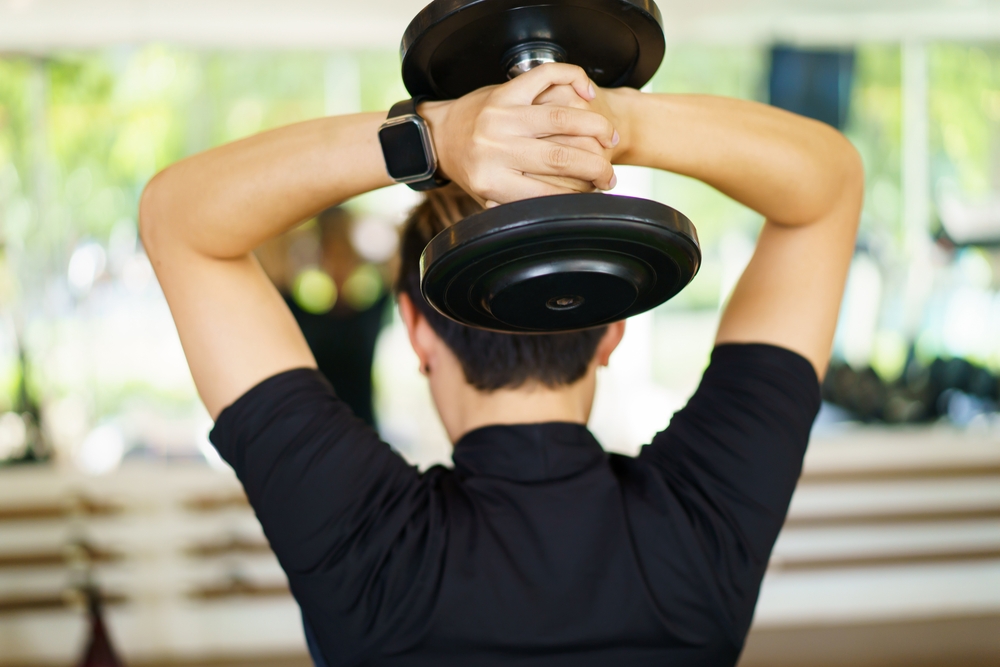
The overhead tricep press targets the triceps, helping build arm strength and definition. Stand with one foot slightly forward for balance while holding a dumbbell overhead with both hands. Keep your core tight and elbows close to your head as you bend your arms to lower the weight behind your head. Once your elbows reach about a 90-degree angle, press the dumbbell back up to the starting position without locking your elbows. Perform 10 to 12 controlled repetitions.
3. Shoulder Press
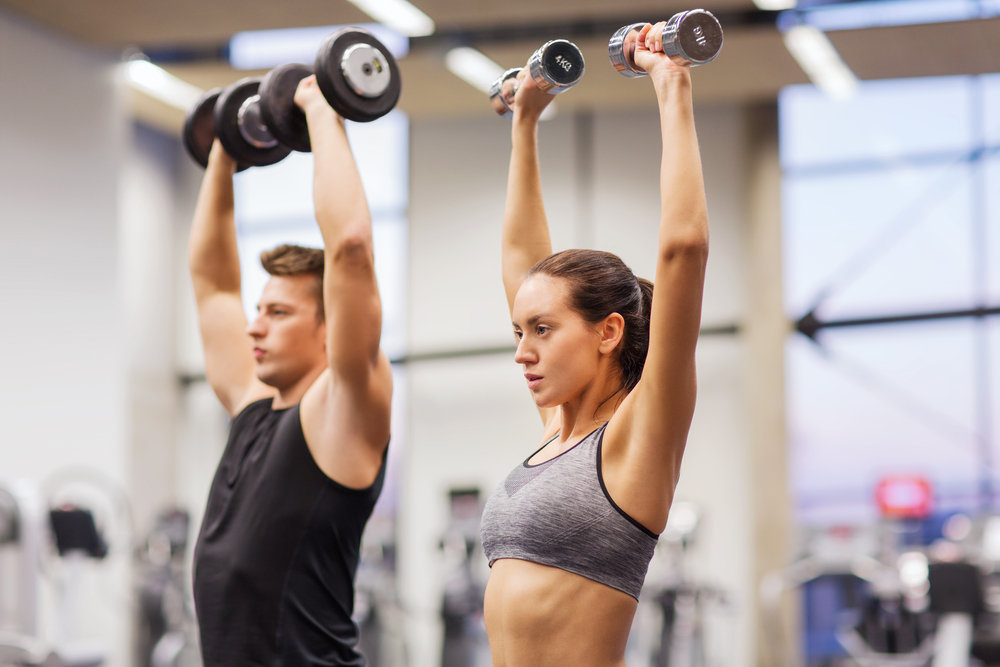
The shoulder press strengthens the deltoids and supports overall upper-body pressing power. Hold a dumbbell in each hand at shoulder height with palms facing forward. Press the weights directly overhead until your arms are fully extended and your biceps are near your ears. Pause briefly at the top, then slowly lower the weights back to shoulder height. Maintain a tight core to prevent arching your back and complete 10 to 12 repetitions.
4. Chest Press
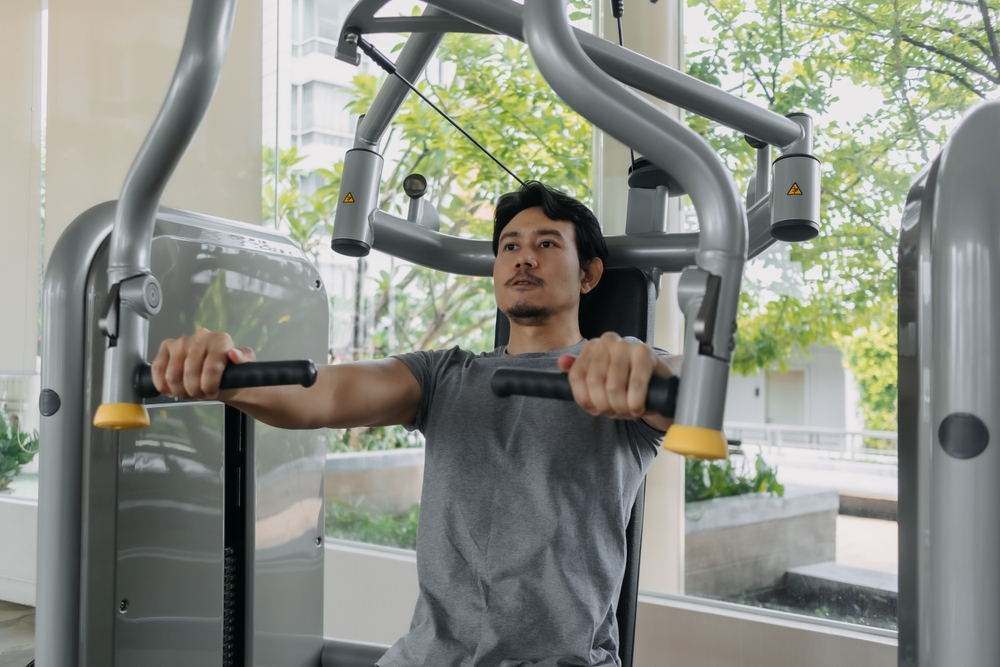
The chest press is excellent for building strength in the chest and triceps. Lie on the floor with a dumbbell in each hand, knees bent and feet flat on the ground. Position your elbows at about a 45-degree angle from your torso with palms facing inward. Press the dumbbells upward until your arms are extended over your shoulders, then slowly lower them back to the starting position. Perform 10 to 12 repetitions with steady control.
5. Skull Crushers
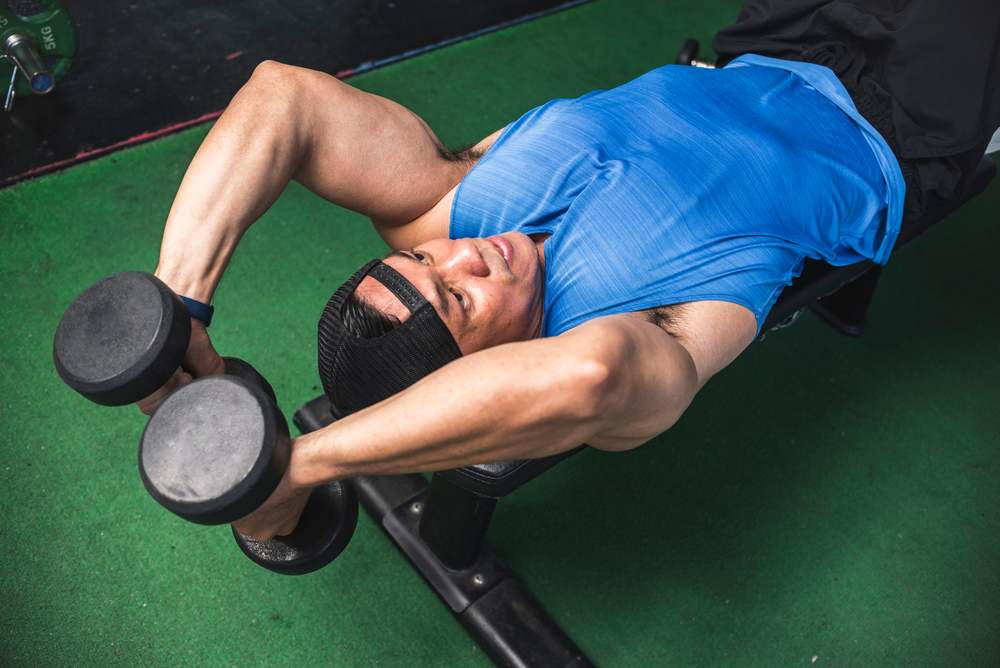
Skull crushers are a focused triceps exercise that enhances arm strength. While lying on a bench or flat surface, hold a dumbbell above your head with both hands and keep your elbows straight. Slowly bend your elbows to lower the weight toward your forehead, then press it back up to the starting position. Keep the movement controlled and complete 10 to 12 repetitions.
Pull Exercises for Balance and Strength
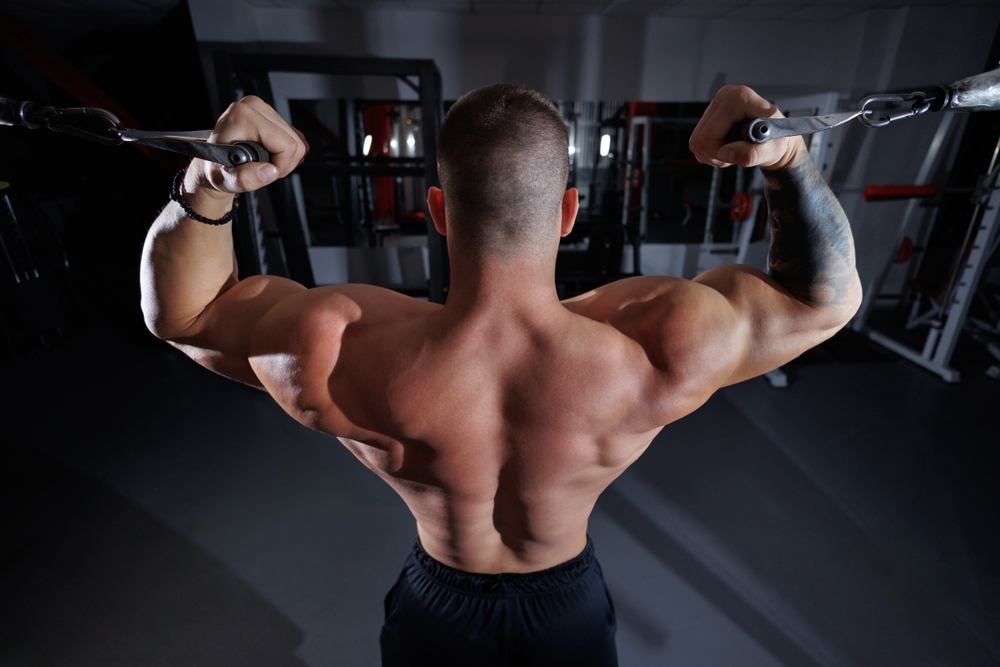
Pull exercises strengthen the muscles along your back and arms, which improves posture, stability, and overall upper-body balance. Training these muscles helps prevent imbalances that can lead to injury.
6. Bicep Curls
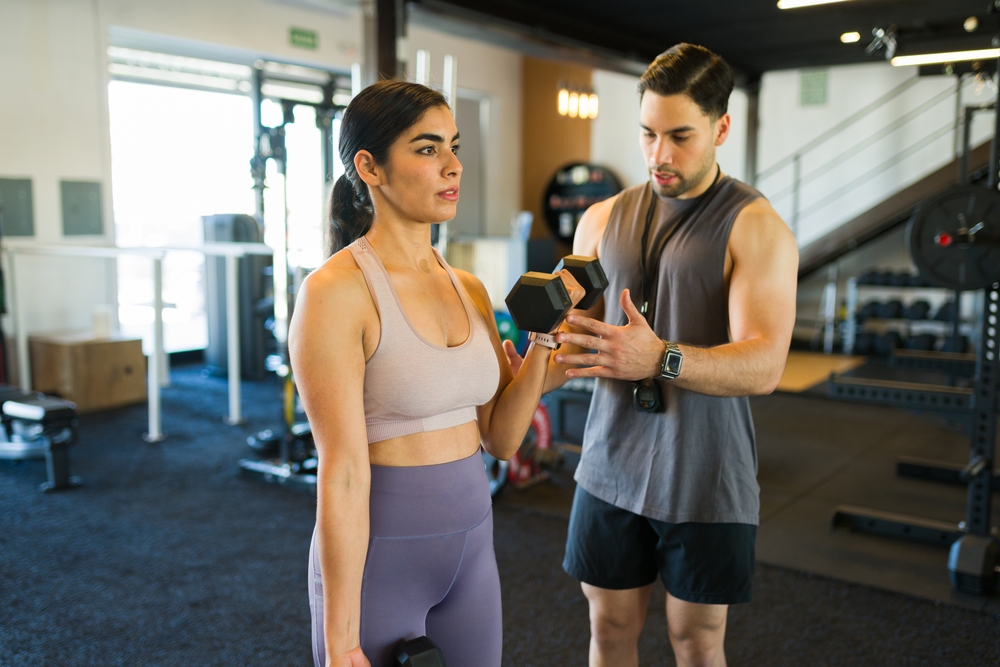
Bicep curls are a simple yet effective exercise for building arm strength. Stand with your feet hip-width apart and hold a dumbbell in each hand with palms facing forward. Keeping your elbows close to your sides and your core engaged, curl the weights toward your shoulders. Pause briefly at the top before lowering them slowly back down. Perform 10 to 12 repetitions.
7. Reverse Fly
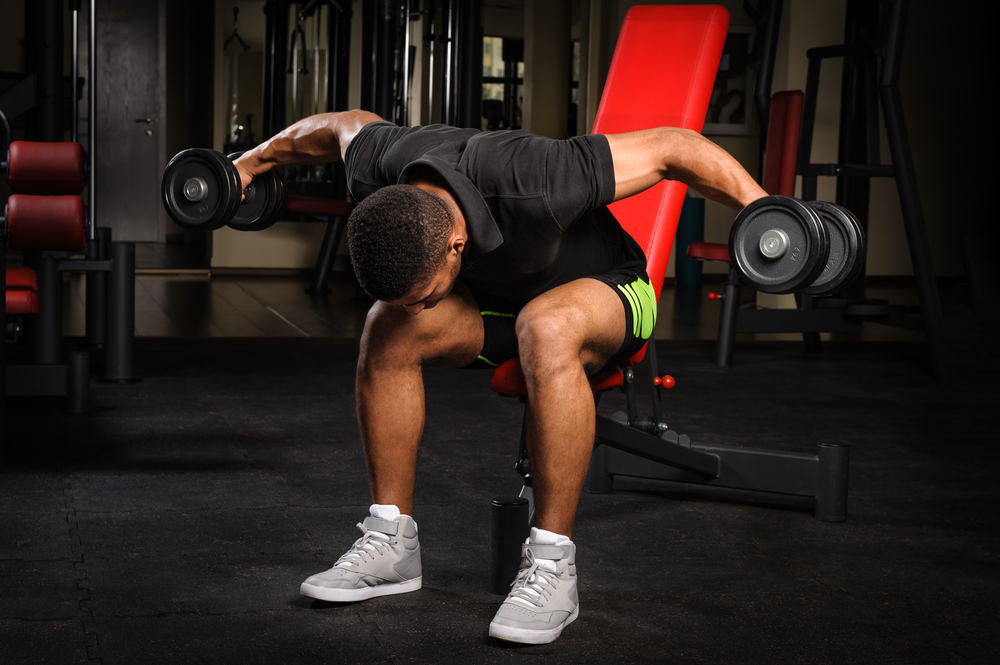
The reverse fly targets the rear shoulders and upper back, areas that are often undertrained. Stand with your feet hip-width apart, knees slightly bent, and hinge forward at the hips so your torso is at roughly a 45-degree angle. Hold a dumbbell in each hand with palms facing each other and arms hanging beneath your shoulders. Lift the weights out to the sides until they reach shoulder height, squeeze your shoulder blades together, and then lower them slowly. Aim for 10 to 12 repetitions.
8. Dumbbell Row
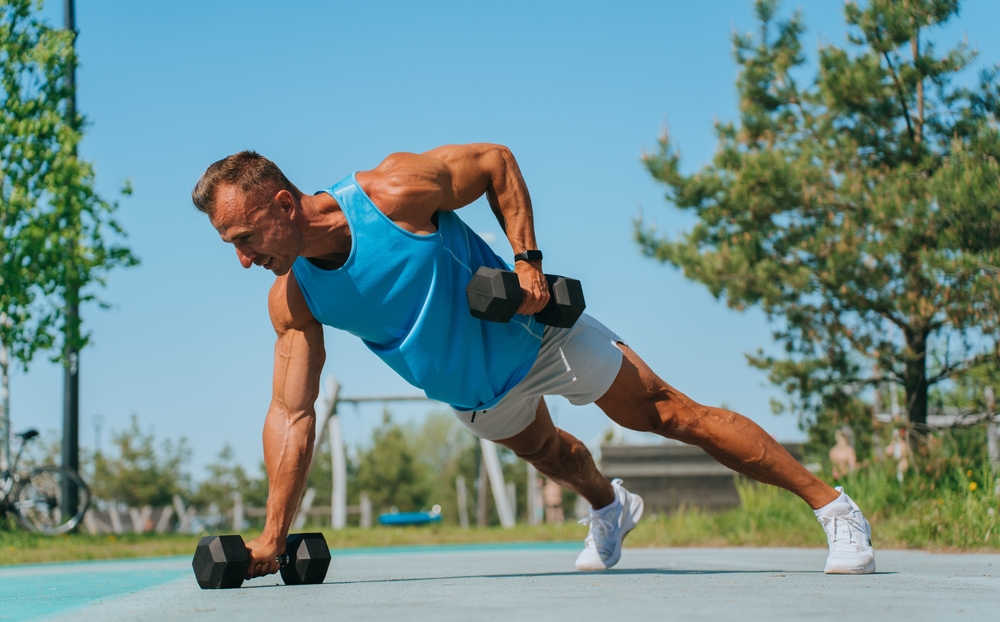
The dumbbell row builds back strength and enhances pulling power. Place one knee and one hand on a bench for support while holding a dumbbell in the opposite hand. Keep your back flat and core engaged as you extend your arm toward the floor. Pull the dumbbell upward toward your hip, keeping your elbow close to your side. Lower it with control and complete 10 to 12 repetitions before switching sides.
9. Hammer Curls
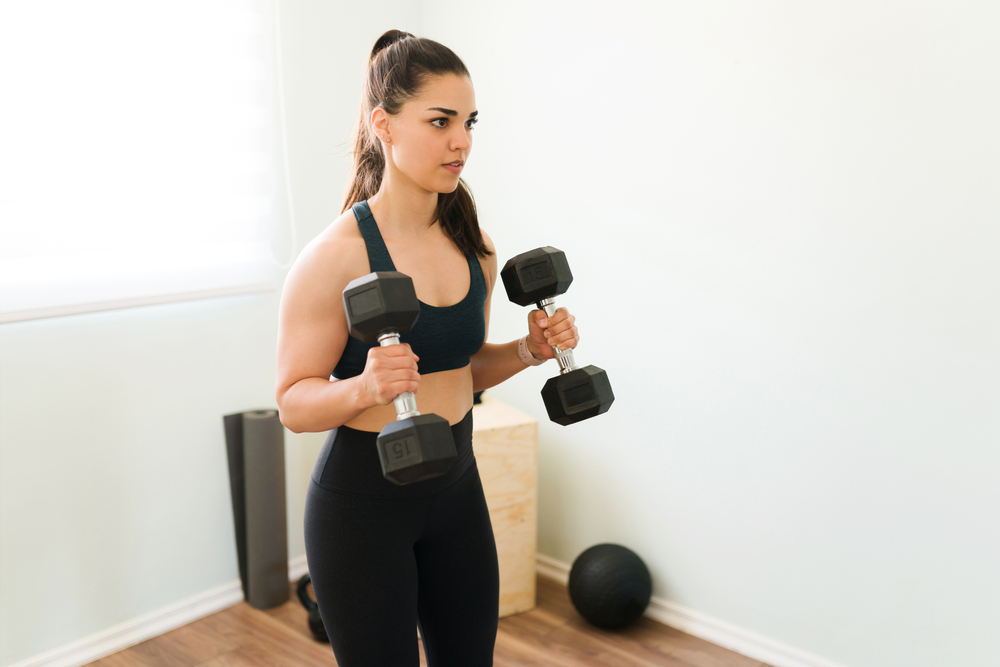
Hammer curls strengthen both the biceps and forearms. Hold a dumbbell in each hand with your palms facing your body and arms extended at your sides. Curl the weights upward without rotating your wrists, keeping your elbows steady. Pause at the top and then lower back to the starting position. Perform 10 to 12 repetitions.
10. Kettlebell Deadlift
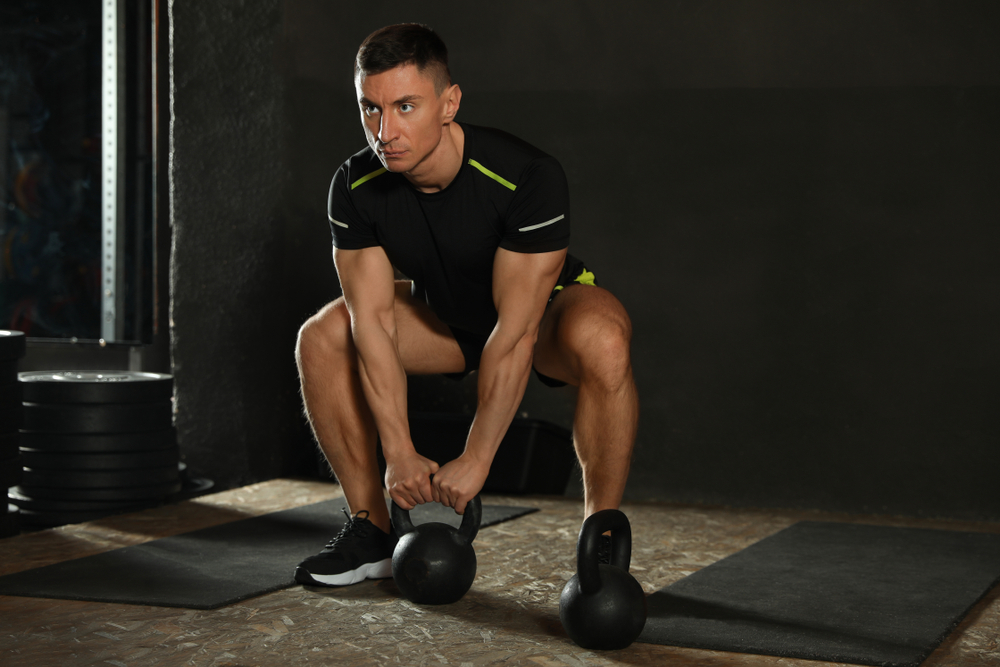
The kettlebell deadlift strengthens your back, grip, and hips while reinforcing proper lifting mechanics. Stand with your feet hip-width apart and a slight bend in your knees. Grip the kettlebell with both hands using a palms-down grip. Push your feet into the floor and drive your hips forward to lift the kettlebell, using your legs and hips rather than your shoulders. Pause briefly at the top before lowering with control. Complete 10 to 12 repetitions.
How To Follow a Push-Pull Workout Routine?
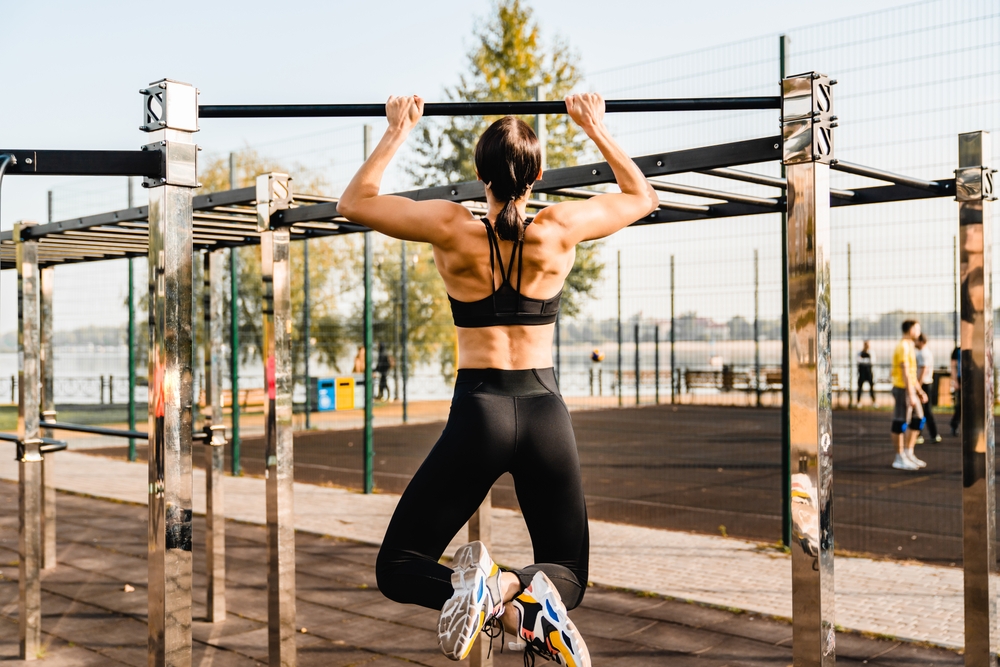
Push-pull training allows you to work the majority of your upper-body muscles efficiently while giving them proper recovery time. Beginners can aim for four workouts per week, alternating between push and pull days with rest in between. For example, you might perform a pull workout on day one, rest on day two, complete a push workout on day three, and continue that pattern. More advanced individuals may add a legs and core session on a rest day if recovery allows.
Tips to Maximize Results
To get the most from your push-pull workouts, focus on proper form and choose weights appropriate for your fitness level. If your technique begins to suffer, reduce the load or repetitions. Changing exercises every six to twelve weeks can help prevent boredom and stimulate muscle growth. Prioritizing sleep is essential, especially when starting a new routine, as muscles grow during recovery. Set realistic goals, create a consistent weekly schedule, and start at a manageable intensity. Most importantly, listen to your body and adjust your workouts as needed to stay safe and make steady progress.
Push-pull training is simple, effective, and adaptable for nearly any fitness level. With consistency and smart recovery, these 10 exercises can help you build stronger arms and a more powerful upper body that supports you both inside and outside the gym.