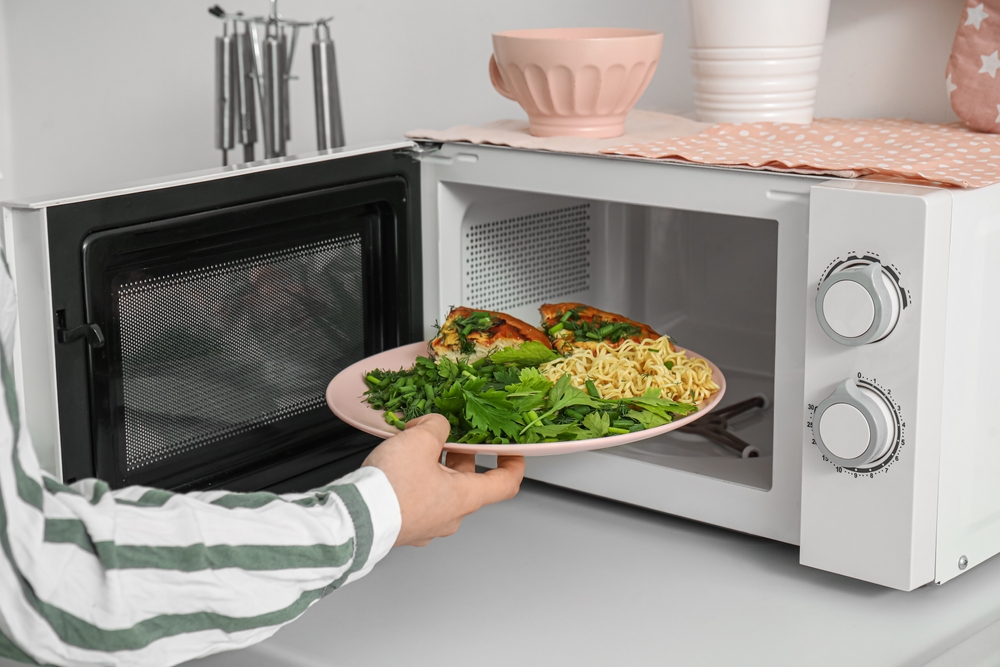
For decades, microwave ovens have been a staple in American kitchens — zapping leftovers, popping popcorn, and reheating coffee in seconds. Yet, ever since they first appeared, people have wondered: Are microwaves dangerous?
The short answer: yes, they can be — but probably not for the reasons you think.
Let’s clear up the confusion with some science (and a dash of common sense).
Understanding How Microwaves Actually Work
Microwave ovens don’t “nuke” your food. They use electromagnetic waves — a form of non-ionizing radiation — to make water molecules inside your food vibrate. That vibration produces heat, which cooks or reheats your meal.
This is very different from the ionizing radiation used in X-rays or nuclear power, which can damage DNA and cause cancer. Microwaves simply make molecules move faster — nothing radioactive about that.
Unless you somehow found yourself inside the microwave with the door closed (please don’t try this), there’s no risk of tissue damage.
Raheem Hashmani, a researcher in high-energy physics at the University of Wisconsin, puts it simply: “The only problem with microwaves would be if you repeatedly exposed yourself to a microwave source — but that’s no different from standing too close to an open flame.”
Is It Safe to Stand Near a Microwave?
If your microwave is in good shape and the door seals properly, you have nothing to worry about.
According to the National Cancer Institute, microwaves use non-ionizing radiation, which has not been linked to cancer. The oven’s design keeps those waves trapped inside — like a metal cage — so radiation can’t escape.
Still, the FDA suggests not pressing your face against the door while it’s running. Not because it’s dangerous, but because there’s no good reason to, and minimizing exposure is always smart.
Can Microwaves Leak Radiation?
They can — but it’s rare.
Microwave ovens are built with safety mechanisms that prevent energy from escaping when the door is open. If the door is damaged, dirty, or doesn’t close tightly, leaks are more likely.
To stay safe:
- Don’t use a microwave with a broken or bent door.
- Keep the seals clean.
- If you notice cracks or gaps, replace it.
Hashmani even shares a clever trick: if your Wi-Fi signal drops every time you use your microwave, it might be leaking — since microwaves and Wi-Fi use similar frequencies.
Should You Microwave Plastic?
This is where things get tricky.
Many plastics, especially those not labeled “microwave-safe,” can release harmful chemicals or microplastics into food when heated. Even containers designed for microwave use may still leach tiny particles during cooking.
Dr. Jeff Culbertson, a food science professor at Ohio State University, recommends using rigid plastic containers and avoiding plastic bags altogether. His advice: run new containers through a few water-heating cycles before using them for food. That helps release unstable compounds before they can migrate into your meals.
If you want to play it extra safe, use glass or ceramic instead.
Does Microwaving Destroy Nutrients?
Good news — microwave cooking actually preserves nutrients better than most other methods.
Because microwaves cook food quickly and from the inside out, heat-sensitive nutrients (like vitamin C or thiamine) are exposed to less heat for less time. Steaming, baking, and air frying, on the other hand, can cause greater nutrient loss.
So not only is microwave cooking convenient, it’s surprisingly efficient at keeping your food nutritious.
Can Microwaves Cause Cancer?
Nope. That’s a myth.
Microwave radiation stops the instant you turn the oven off — it doesn’t linger in your food. The waves themselves aren’t strong enough to alter your body’s cells or DNA.
In short: microwaved food is not radioactive.
What About Food Safety?
Microwaves can kill bacteria just as effectively as other cooking methods — if your food is heated evenly. Dense or thick foods may have cold spots where bacteria can survive, so it’s smart to stir or rotate food halfway through heating.
Dr. Culbertson warns that microwaving food multiple times isn’t ideal: “It’s not exactly a safe process from a food safety standpoint, and it doesn’t taste as good either.”
So, heat once — and eat it while it’s hot.
Watch Out for “Superheating”
Microwaving water or liquids can sometimes lead to superheating — when the water gets hotter than its boiling point without bubbling. Add a tea bag or spoon afterward, and it can erupt like a mini volcano.
To prevent burns:
- Stir liquids before and during heating.
- Add a tea bag or powder before turning the microwave on.
- Avoid overheating.
- Use containers with sloped sides.
Microwave ovens aren’t dangerous when used properly — they’re just misunderstood.
They don’t cause cancer. They don’t make food radioactive. They’re actually one of the most nutrient-friendly cooking tools in your kitchen.
The real risks come from damaged doors, plastic containers, and uneven heating — all things that can be easily avoided with a little care.
So go ahead — reheat that leftover pizza with confidence. Your microwave isn’t out to get you. It’s just doing its job — fast, efficient, and (mostly) harmless.