Medically Reviewed by Rishi Panchal, DO, FACC, RPVI
We often see athletes and bodybuilders with prominent, “popping” veins and wonder if their workout routine is to blame. Or perhaps you’ve noticed your own veins bulging during a run and worried you were damaging them. In this article, we’ll explain why veins pop during exercise, whether it’s dangerous, and how to work out safely if you have vein disease.
The Short Answer
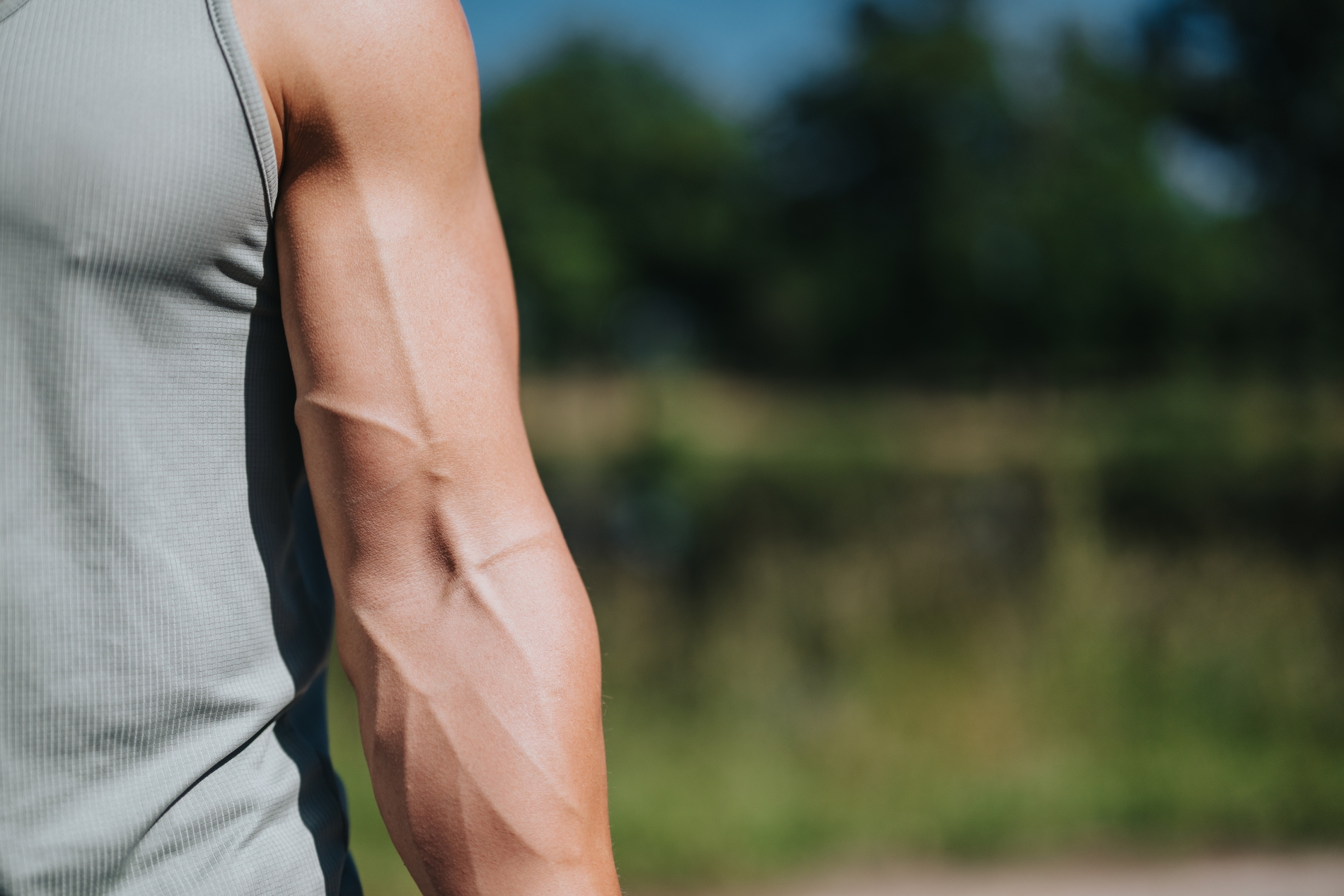
Yes, exercise makes veins more visible, but this is usually temporary and healthy. When you work out, your heart pumps more blood to your muscles. To handle this increased volume, your veins naturally expand (dilate). Additionally, your muscles swell and harden, pushing the veins closer to the surface of your skin. This “pumped” look typically fades a few hours after your workout.
Why This Happens
Increased Blood Volume and Pressure
During intense exercise, arterial blood flow to your muscles can increase by 5–10 times compared to rest. Your veins have to return all that blood to the heart. To accommodate this massive surge in flow, the veins widen (vasodilation), making them appear larger and more prominent.
The “Muscle Pump” Effect
As you lift weights or run, your muscles contract and swell with plasma. This swelling reduces the space under your skin, physically pushing your veins toward the surface. At the same time, the loss of subcutaneous fat often seen in active individuals makes these veins even easier to see.
Straining and Valsalva
When you hold your breath to lift a heavy weight (the Valsalva maneuver), you temporarily increase the pressure in your chest and abdomen. This pressure acts like a dam, briefly preventing blood from returning to the heart, which causes the veins in your limbs and neck to bulge significantly.
Normal vs Concerning
Normal if:
- Veins bulge during and immediately after exercise
- They return to normal size within 1–2 hours of resting
- The bulging is painless and occurs on both sides of the body (e.g., both arms)
Call a doctor if:
- You have bulging veins that never go down, even after rest
- The veins are ropey, twisted, or painful (signs of varicose veins)
- You experience swelling in just one leg that persists
- You feel a throbbing pain or burning sensation over a vein
How Doctors Evaluate It
At IVY Cardiovascular & Vein Center, Dr. Rishi Panchal distinguishes between “fitness veins” and “disease veins.”
- Fitness Veins: These are straight, healthy veins that are visible because of low body fat and high blood flow. They are a sign of a strong cardiovascular system.
- Varicose Veins: These are twisted, darker, and swollen due to broken valves (reflux).
We use ultrasound to check the blood flow. If the blood is moving efficiently toward the heart, your visible veins are healthy. If the blood is falling backward (reflux), it’s vein disease, not just a “workout pump”.
Treatment Options
For “Fitness Veins”
No treatment is needed. In fact, prominent straight veins are often considered a badge of honor in the fitness community. If you dislike the look, maintaining a slightly higher body fat percentage will hide them.
For Varicose Veins
If exercise makes your varicose veins throb or ache:
- Compression Gear: Wear compression socks or sleeves during your workout to support the vein walls.
- Low-Impact Cardio: Swimming and cycling are excellent because they work the calf pump without the pounding impact of running.
- Treat the Source: We can seal the underlying bad veins with ablation, which often reduces the bulging and allows you to exercise pain-free.
FAQs
Can heavy lifting cause varicose veins?
Heavy lifting doesn’t cause them, but it can worsen them if you already have weak valves. The intense abdominal pressure from squatting or deadlifting can push blood backward into the legs. Wearing compression gear helps mitigate this.
Is running bad for my veins?
Running is generally good because it activates the calf muscle pump. However, the high impact on concrete can be jarring for existing varicose veins. Try running on softer surfaces (grass, track) or wearing compression socks.
Why do my hands get so veiny after working out?
Your hands are below your heart level during many exercises, and gravity combined with increased blood flow causes fluid to accumulate there. It’s harmless and usually resolves quickly.
Love your workout but hate the way your veins look or feel? You don’t have to quit the gym. Dr. Rishi Panchal at IVY Cardiovascular & Vein Center can help you keep your legs healthy and strong. Schedule a consultation online or call our office today.