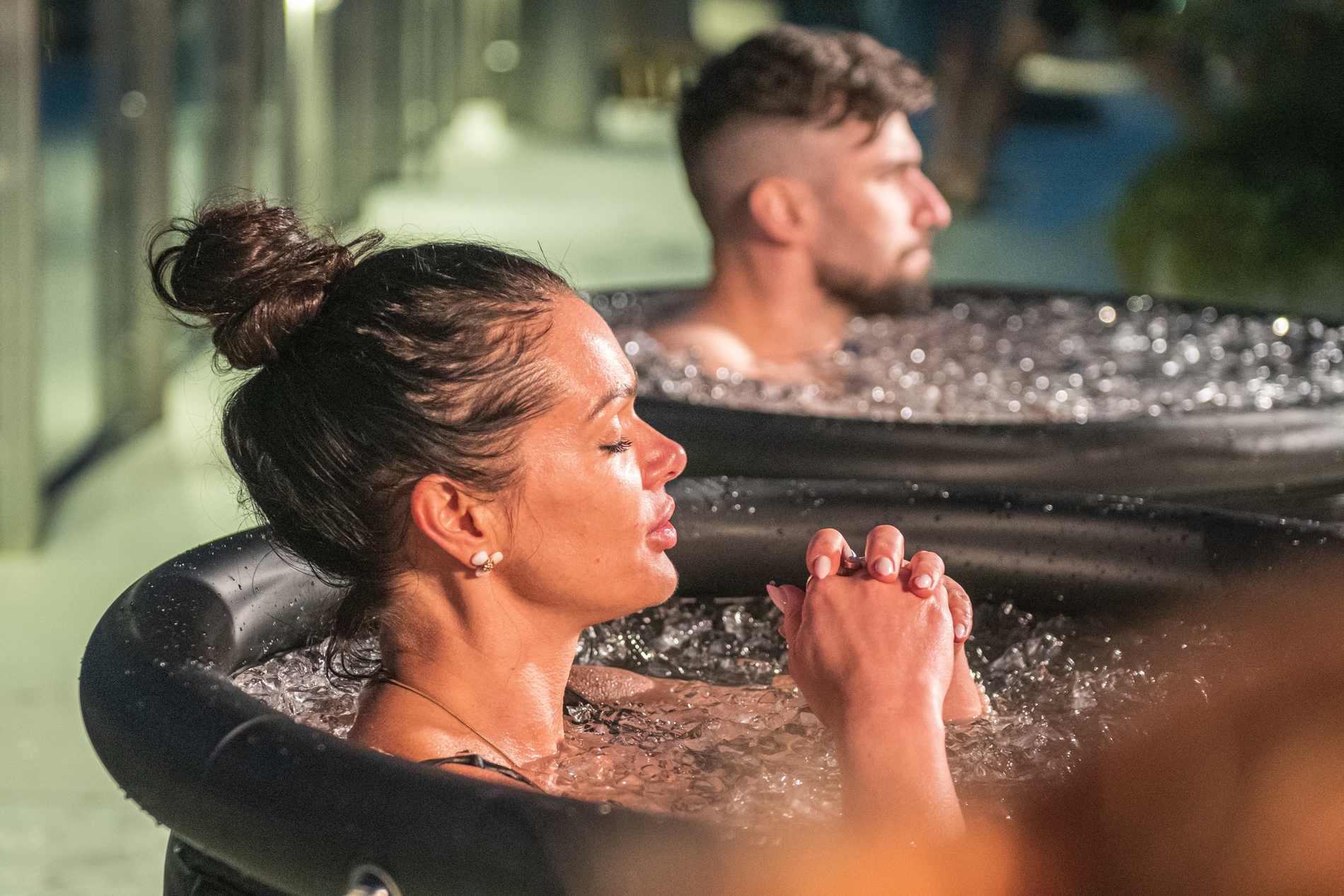
You sit in a blistering sauna, sweating through your skin and feeling like a slowly baked potato. Just as your brain begs for mercy, you step out and plunge your body directly into a tub of ice water so cold it steals the air right out of your lungs.
On paper, shocking your nervous system with extreme temperature swings sounds like a bizarre form of self-punishment. If you have ever watched people suffer through ice baths online, you might have rolled your eyes and assumed it was just another theatrical wellness trend.
But alternating between hot and cold environments—a practice known as contrast therapy—is actually a highly sophisticated, mechanical reset for your cardiovascular system. It is one of the oldest and most effective tools for flushing out muscle soreness and accelerating tissue recovery.
The Vascular Pump Mechanism
Your blood vessels react to temperature like an automatic pump. When you expose your body to high heat, your blood vessels dilate, rushing blood out toward your skin and extremities. The moment you drop into the cold, those same vessels violently constrict, forcing that blood backward toward your core and internal organs.
By switching rapidly between the two, you create an involuntary vascular squeeze. This rhythmic pumping action flushes stagnant metabolic waste out of your damaged muscle fibers while simultaneously flooding the tissue with a fresh wave of oxygenated, nutrient-dense blood. It slashes systemic inflammation, decreases joint stiffness, and cuts down recovery time significantly faster than simply lying on the couch.
The Home Shower Contrast Protocol
You do not need a commercial spa setup to leverage this recovery strategy. You can replicate the process right in your home shower by following these parameters:
- Nail the Ratio: Stick to a 3-to-1 ratio of hot to cold. Spend 3 minutes under hot water followed immediately by exactly 1 minute of cold.
- Manage the Thresholds: Keep the hot cycle comfortably warm (around 38°C to 40°C) and drop the cold cycle as low as your shower valve allows—ideally under 15°C.
- Run the Rounds: Repeat the hot-cold circuit 4 times consecutively for a total of 16 minutes of therapy.
- Always Finish Cold: End your final round on the cold cycle. This leaves your blood vessels constricted, which prevents blood from pooling in your lower limbs and keeps inflammation at bay.
Pro-Tip: Focus entirely on your breathing during the cold shift. The sudden shock of cold water triggers an involuntary gasp reflex that spikes your heart rate. Force yourself to take slow, 4-second exhalations through your nose. Retraining your brain to remain calm under temperature shock shifts your nervous system into a deep parasympathetic recovery state.
Your First Step: The 24-Hour Upgrade
Retraining your body to handle temperature contrast does not require a premium gym membership or a backyard ice chest. Let’s execute a basic micro-dose during your next shower.
In the next 24 hours: At the very end of your standard shower, instead of turning off the faucet, crank the handle all the way to cold for exactly 30 seconds. Let the water hit the back of your neck and shoulders while practicing slow, controlled belly breaths. Step out, dry off, and notice the immediate surge of alertness and physical lightness. Once those 30 seconds feel easy, you are ready to build up to the full protocol.