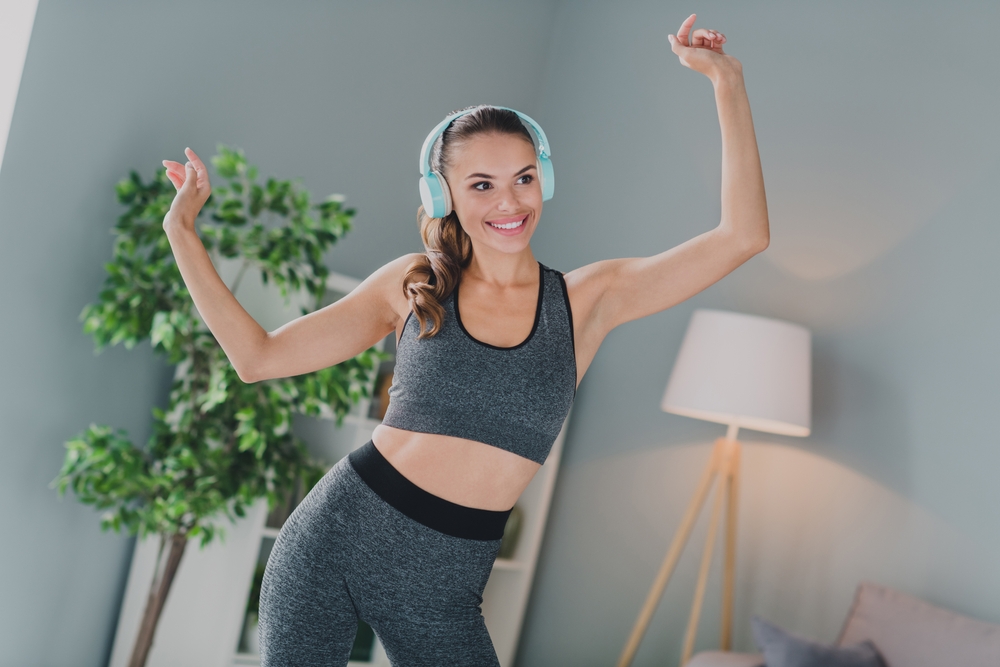
You’re not alone if you’ve ever entered a dance fitness or step aerobics class and thought the teacher was speaking a foreign language. The majority of aerobic dance steps are actually quite easy once you grasp the fundamentals, despite the fact that those fast cues and strange motions can initially be frightening. Your first class will feel much more relaxed and enjoyable if you take the time to learn the fundamentals. Additionally, dance aerobics has advantages like stronger bones, increased muscle endurance, better coordination, sharper cognition, and lowered blood pressure in addition to being fun. Here are six simple steps that will help you move confidently if you’re ready to get started.
1. The Basic Step
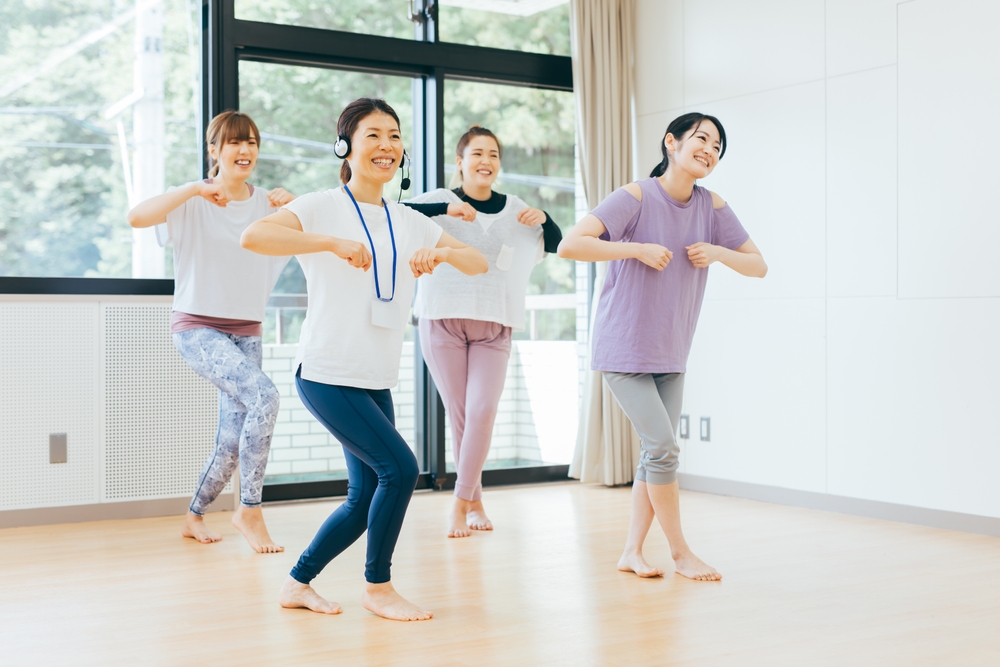
The basic step is an excellent starting point for many aerobic exercises. Place your feet hip-width apart to begin. With your dominant leg, take a two-foot step forward and shift your weight onto it. Then take a step back to where you started, meeting it with your other foot. This straightforward forward-and-back pattern promotes rhythm and coordination. For variation, you can repeat on the same side multiple times or switch legs; either way works, so do what feels most natural.
2. The V-Step

The broad V-shaped pattern your feet make as you move is where the V-step gets its name. Start with your feet hip-distance apart and parallel to each other. In order to create that broad V shape, step your dominant foot diagonally forward toward one corner of the room and then step your opposing foot toward the other corner. Return your dominant foot to the center, then your other foot. Once you’re comfortable, you can simply switch your leading leg. It’s a fluid, open movement that adds energy without being difficult.
3. The Step Touch
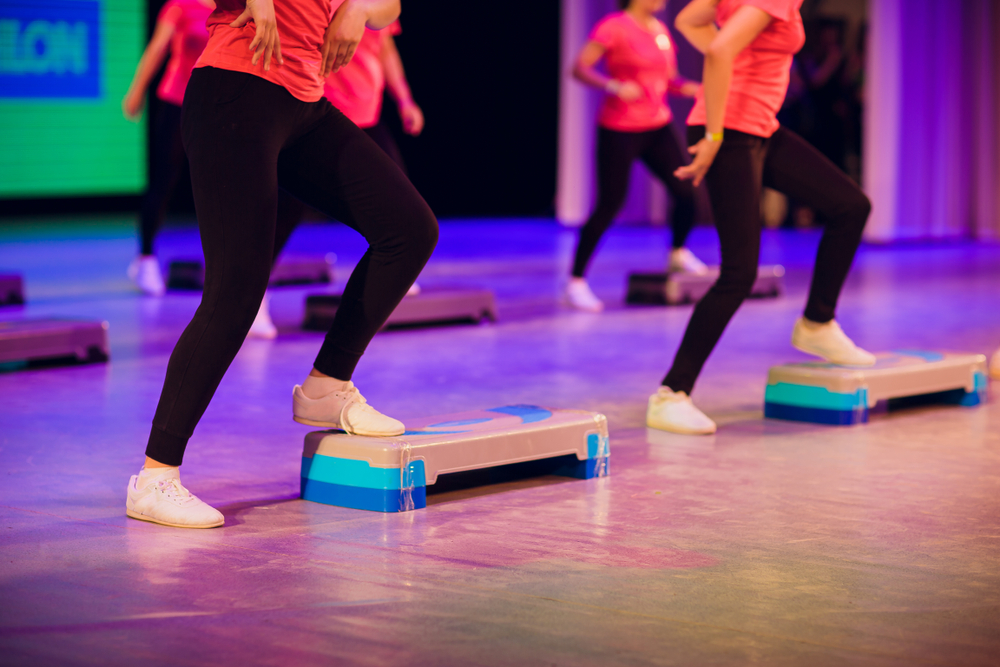
The step touch is a low-impact exercise that helps you discover your rhythm and warm up your body. Step your dominant foot to the side after standing with your feet hip-width apart. To tap next to it, bring your other foot in. To create a soft side-to-side flow, repeat the motion in the opposite direction. This move can be kept simple or improved with arm or direction changes in the future. To add a fun musical feel, many people prefer to take two or four steps in one direction before switching sides.
4. The Mambo
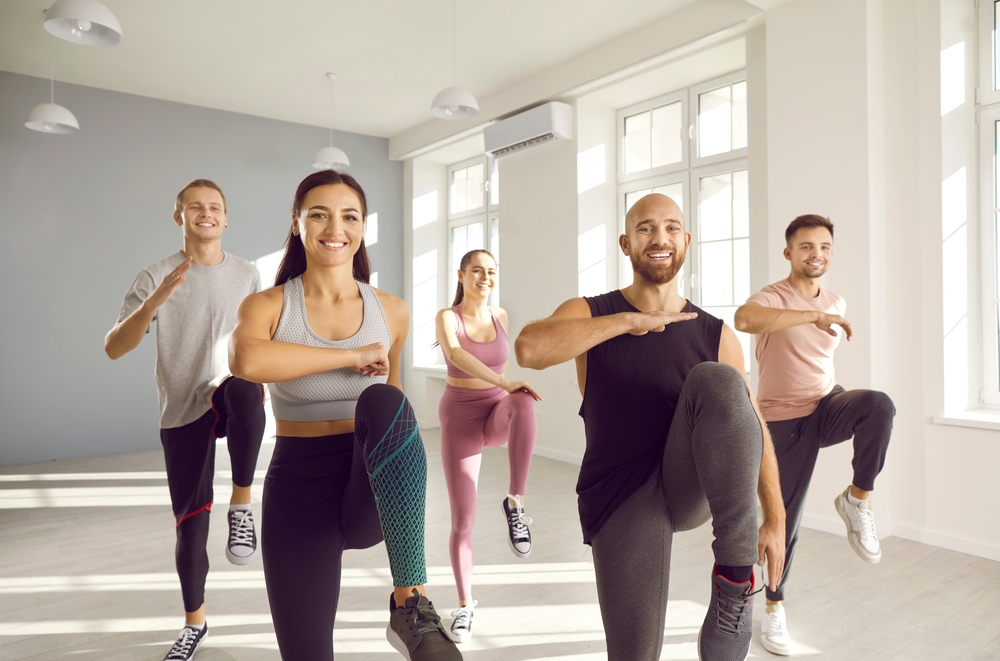
The mambo’s dance-inspired vibe adds a little flair to your routine. Place your feet hip-width apart to begin. Allow your weight to shift onto your right foot as you take a small forward step. Then, as your right foot returns to its starting position, rock your weight back onto your left foot. The step’s distinctive groove is created by this forward-and-back rocking motion. To maintain balance, you can alternate or repeat multiple times with the same leg. Try the forward mambo sideways for an additional twist once you get the hang of it.
5. The Box Step (Jazz Square)

The box step, sometimes referred to as the jazz square, focuses on using your steps to form a square pattern. Place your feet hip-width apart to start. Step your right foot out and back to the side after crossing your left foot forward over your right. To complete the “square,” step your right foot slightly forward after bringing your left foot back to the center. This fluid, crossing motion enhances coordination and gives your routine a fashionable touch. As with all steps, once you’re comfortable, you can change the leading leg.
6. The Grapevine
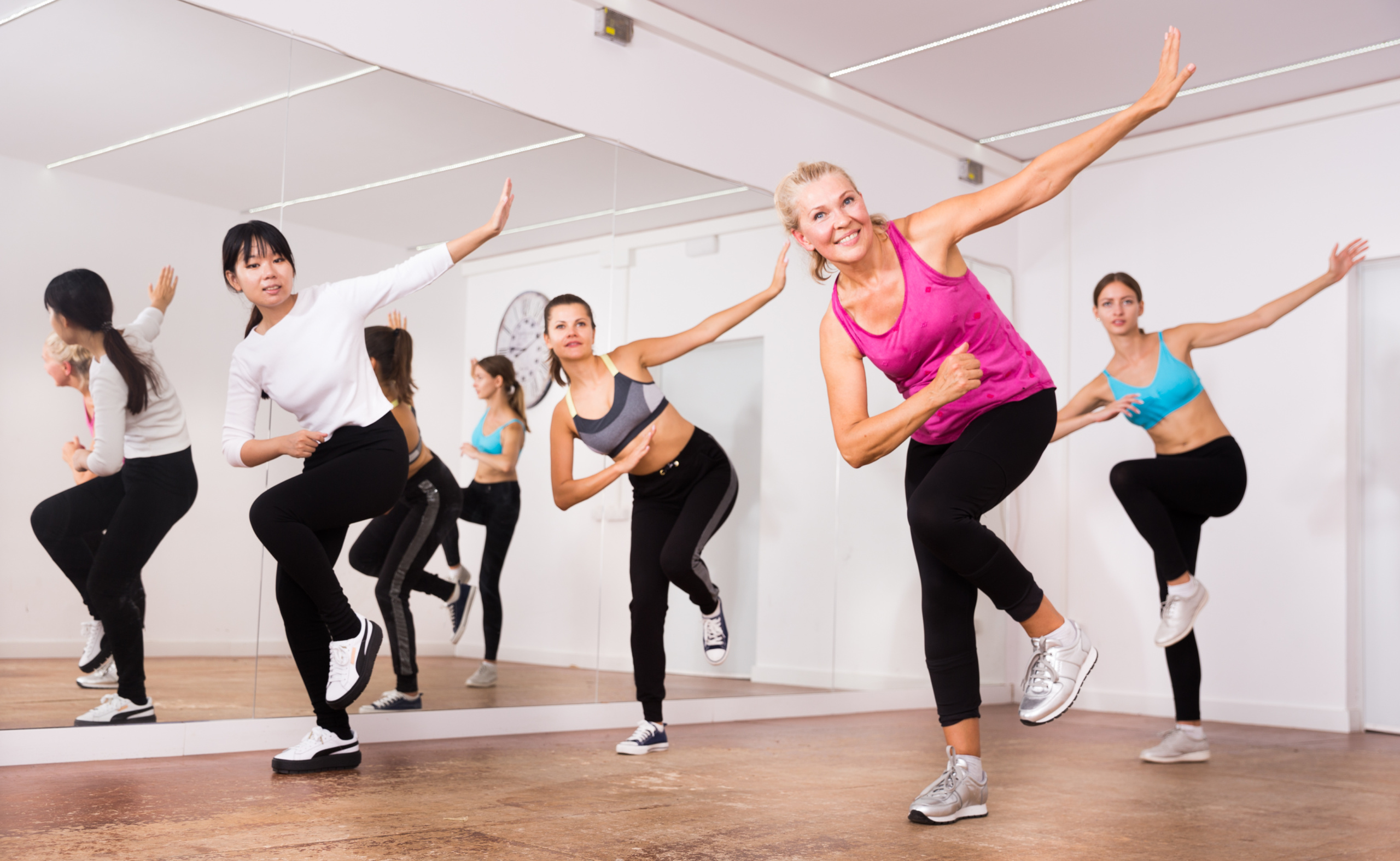
The grapevine is a traveling step that helps you move across the floor with ease. Start with your feet hip-width apart, then step your right foot out to the side. Cross your left foot behind your right, creating a weaving motion. Step your right foot out again to return to your starting width. Repeat on the same side or switch directions to the left. The grapevine feels especially dance-like and pairs well with small arm movements or claps if you want to add some personality.
Dance aerobics is a lively, uplifting way to break up your exercise routine—and with just a few basic steps, you can walk into class feeling ready and excited. These foundational moves help you build confidence, coordination, and endurance while keeping things fun and approachable. The most important part is to move at a pace that feels good for your body and enjoy the process of finding your groove. If you’d like help turning these steps into a beginner-friendly routine or want a printable version to practice with, I’d be happy to create one!