If there’s one exercise that quietly does everything, it’s the plank. No fancy machines, no massive space, no complicated choreography—just you, your body, and gravity doing its thing. Planks borrow the best elements from Pilates, yoga, and stretching, making them a total-package move that strengthens your core, improves posture, and burns serious calories.
The golden rule of planking? Keep your body in one strong, straight line from head to heels. Once you’ve nailed that, the fun really begins—because planks come in many spicy variations. Whether you’re a beginner or a core-crushing pro, here are 19 plank exercises to level up your workouts and keep boredom far, far away.
1. Forearm Plank
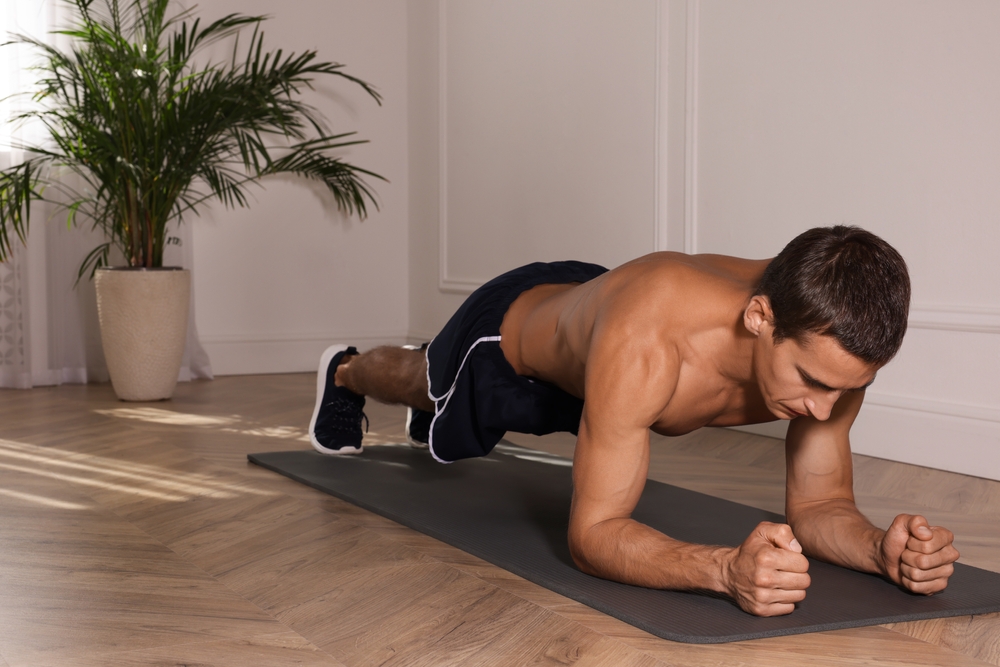
The forearm plank is the foundation of all plank variations. Begin by lying face down with your legs extended and thighs squeezed together. Place your elbows directly under your shoulders and rest your forearms on the floor. Tuck your toes, engage your abdominal muscles, and lift your body so it forms a straight line from shoulders to heels. Press your forearms firmly into the ground, breathe slowly, and hold this position for 30 to 60 seconds before lowering back down with control.
2. Straight-Arm Plank
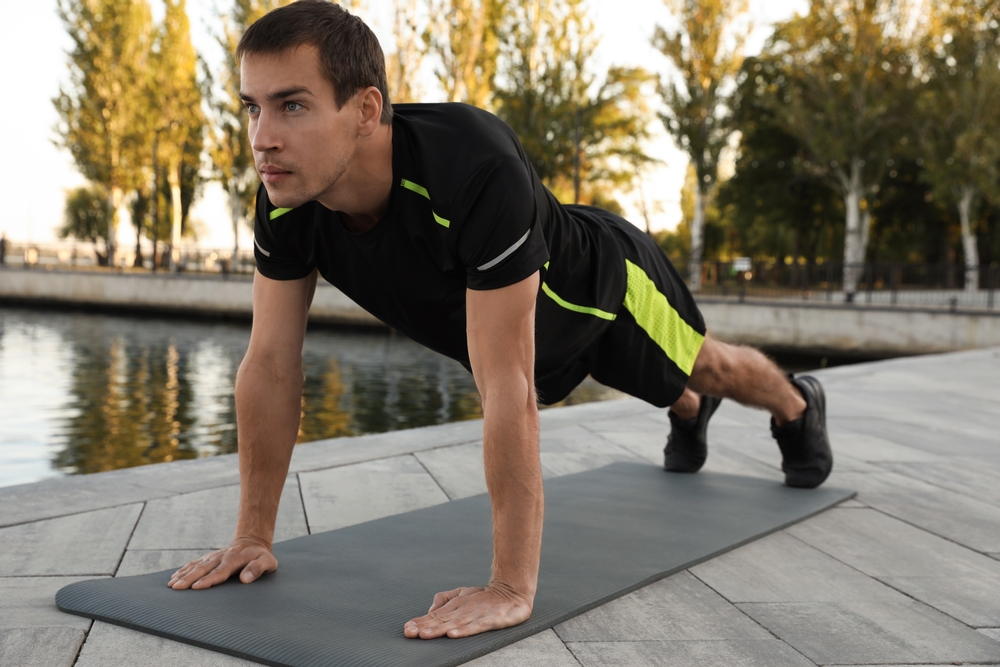
The straight-arm plank resembles the top position of a push-up and places greater demand on shoulder stability. Start on your hands and knees with wrists aligned under your shoulders. Step one foot back at a time, straighten your legs, and engage your core. Push the floor away through your palms while keeping your body in a straight line. Hold the position for 30 to 60 seconds without letting your hips sag or lift too high.
3. Side Plank
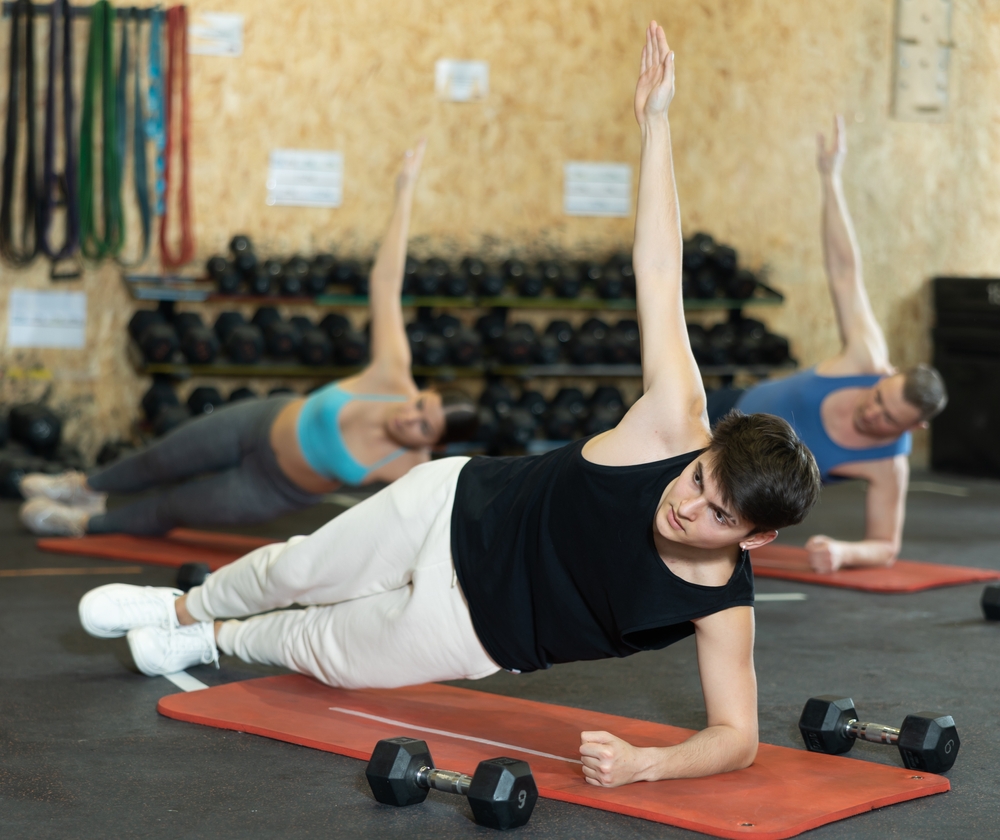
The side plank targets the oblique muscles along the sides of your waist while still engaging your deep core. Lie on one side with your hips, knees, and feet stacked. Press your supporting hand into the floor and lift your hips upward, forming a straight diagonal line from shoulders to heels. Extend your top arm toward the ceiling and hold for 30 to 60 seconds before switching sides.
4. Dolphin Plank
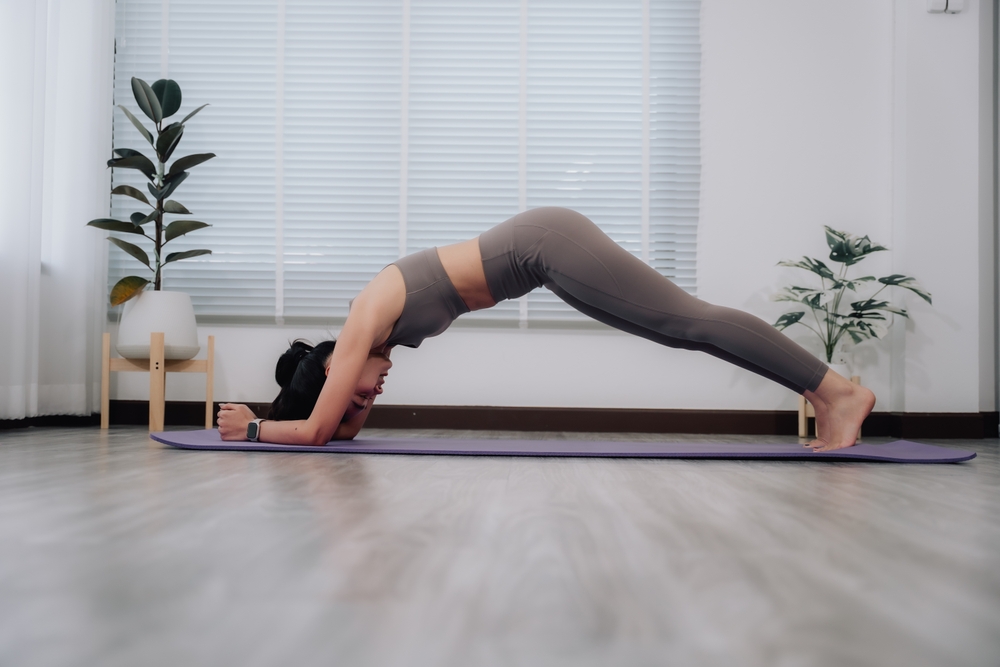
The dolphin plank is a wrist-friendly variation that blends plank strength with yoga-inspired movement. Start in a forearm plank position, then slowly shift your hips upward toward the ceiling, creating an inverted V-shape. Lower your hips back into the forearm plank and repeat the movement smoothly for multiple repetitions. This variation challenges the core while reducing pressure on the wrists.
5. Side Plank Crunch
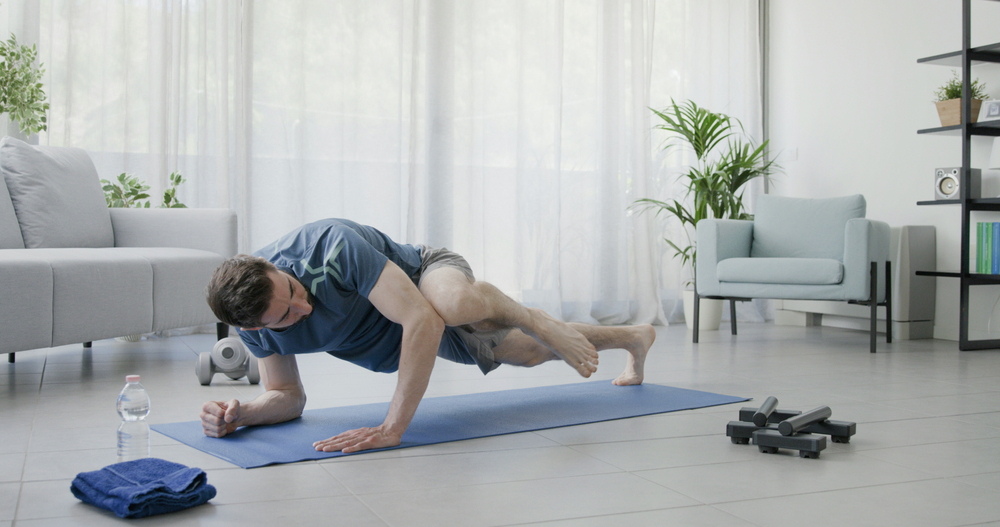
The side plank crunch combines core stability with dynamic movement. Begin in a straight-arm side plank with your body stacked and your supporting shoulder directly over your wrist. Place your top hand behind your head and crunch by bringing your top knee toward your elbow. Slowly return to the side plank and repeat before switching sides. This move intensifies oblique engagement.
6. Plank Knee Tap
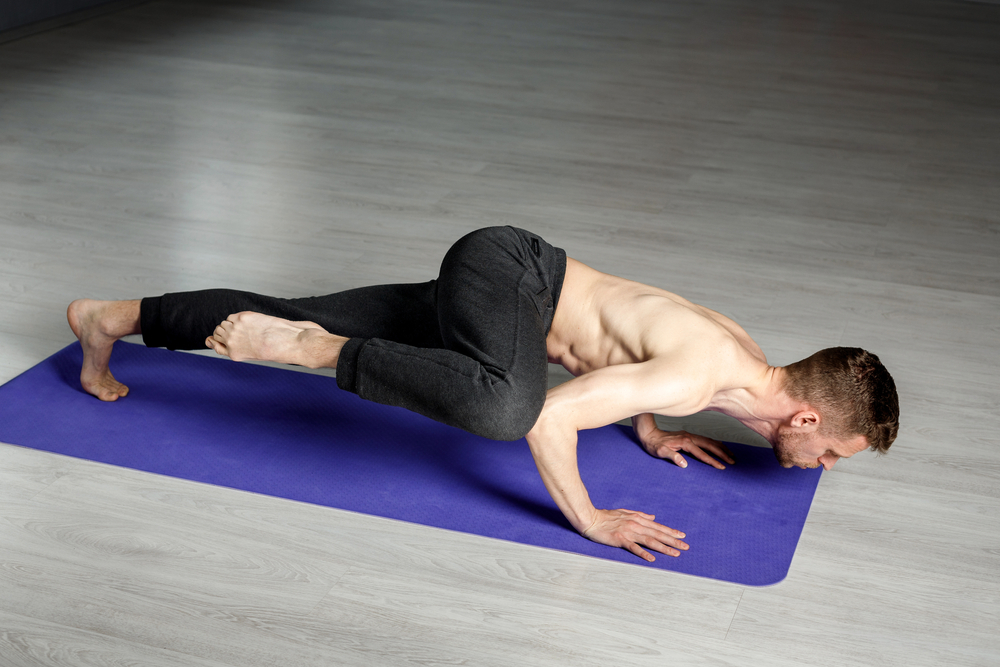
The plank knee tap focuses on the deep abdominal muscles that stabilize your spine. From a forearm plank, keep your body in a straight line while gently bending both knees toward the floor. Pause briefly, then straighten your legs to return to plank. Maintain steady hips throughout the movement and repeat for controlled repetitions.
7. Caterpillar Plank
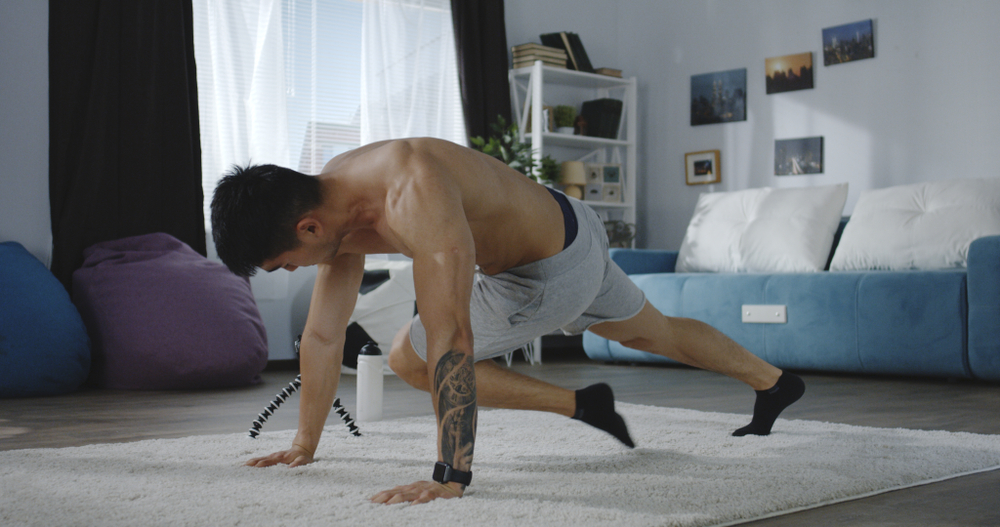
The caterpillar plank adds a dynamic flow to traditional planking. Start standing, then hinge forward at the waist and place your hands on the floor. Walk your hands forward until you reach a plank position. From there, draw one knee toward your chest, then switch sides. Walk your hands back toward your feet and roll up to standing, repeating the sequence for time or reps.
8. Twisting Knee Plank
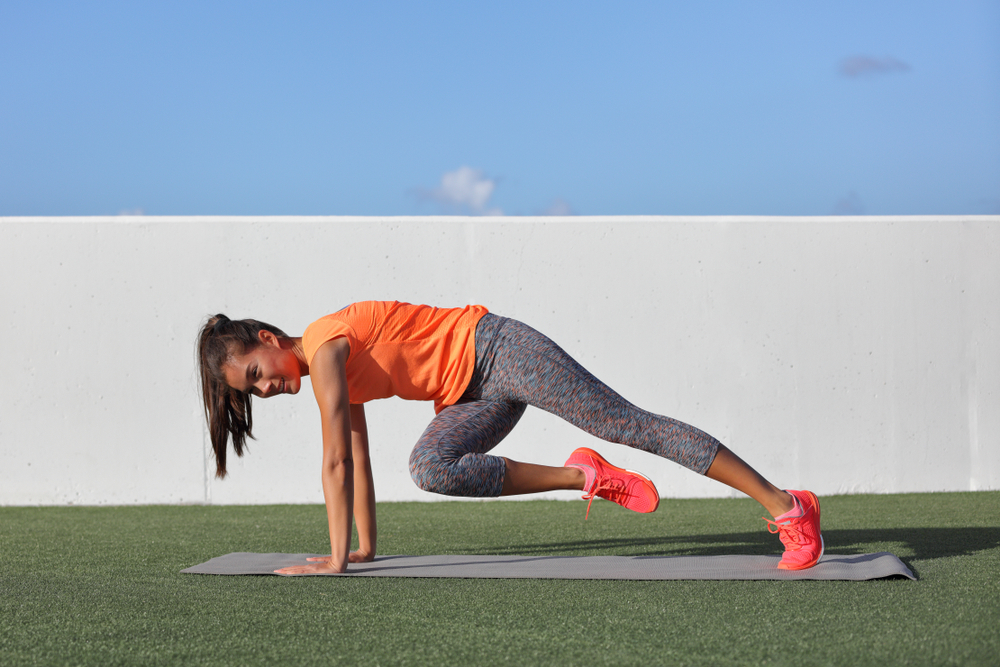
This variation introduces rotation to challenge your core even further. Begin in a straight-arm plank with your shoulders stacked over your wrists. Slowly rotate your hips toward one side, then return to center and repeat on the other side. Add diagonal knee pulls by bringing one knee toward the opposite elbow. Continue alternating while keeping your upper body stable.
9. Resistance Band Plank
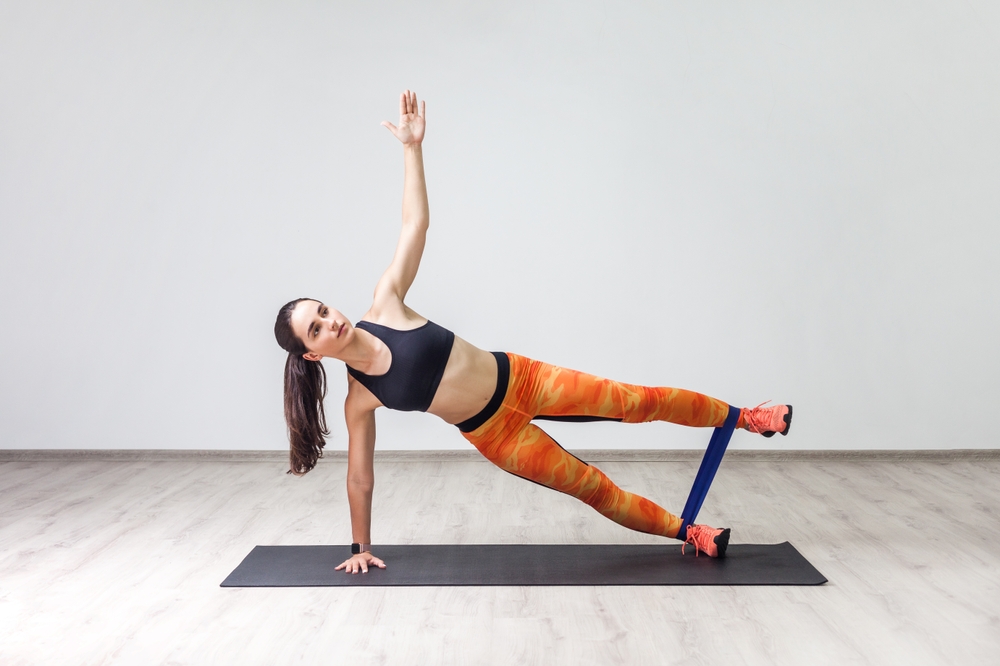
Adding a resistance band increases the difficulty by challenging upper-body stability. Place a mini resistance band around your forearms just above your wrists and assume a straight-arm plank. Step one hand out to the side against the band’s resistance, return to center, then repeat on the other side. This exercise strengthens both the core and shoulders.
10. One-Legged Plank
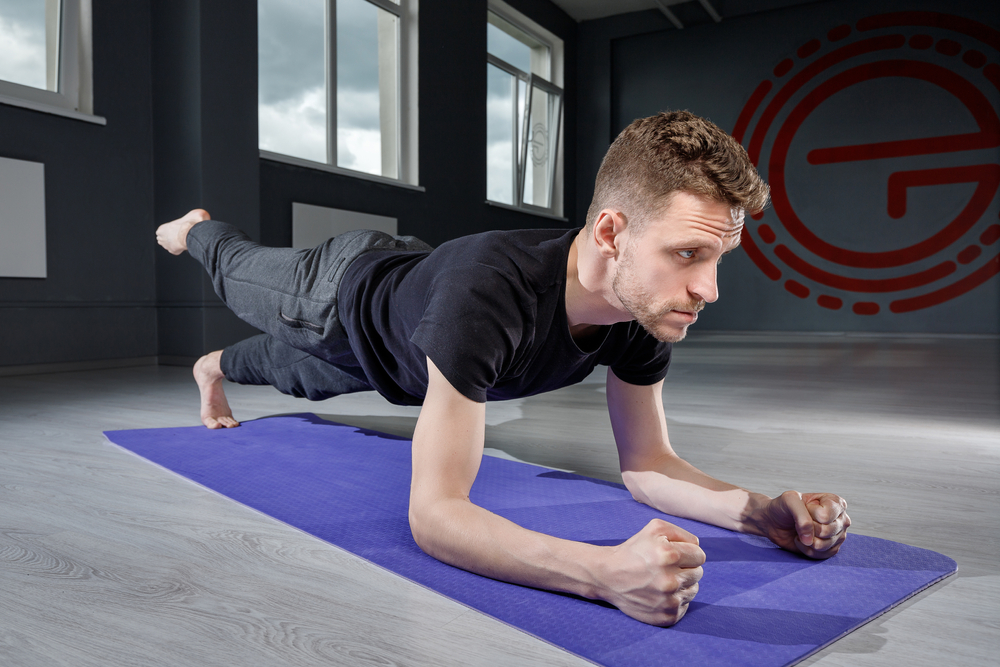
The one-legged plank increases the demand on your core by reducing stability. From a straight-arm plank, lift one leg a few inches off the floor while keeping your hips level. Hold briefly, lower the leg, and repeat on the opposite side. Continue alternating while maintaining proper alignment.
11. Plank With Elbow Lift
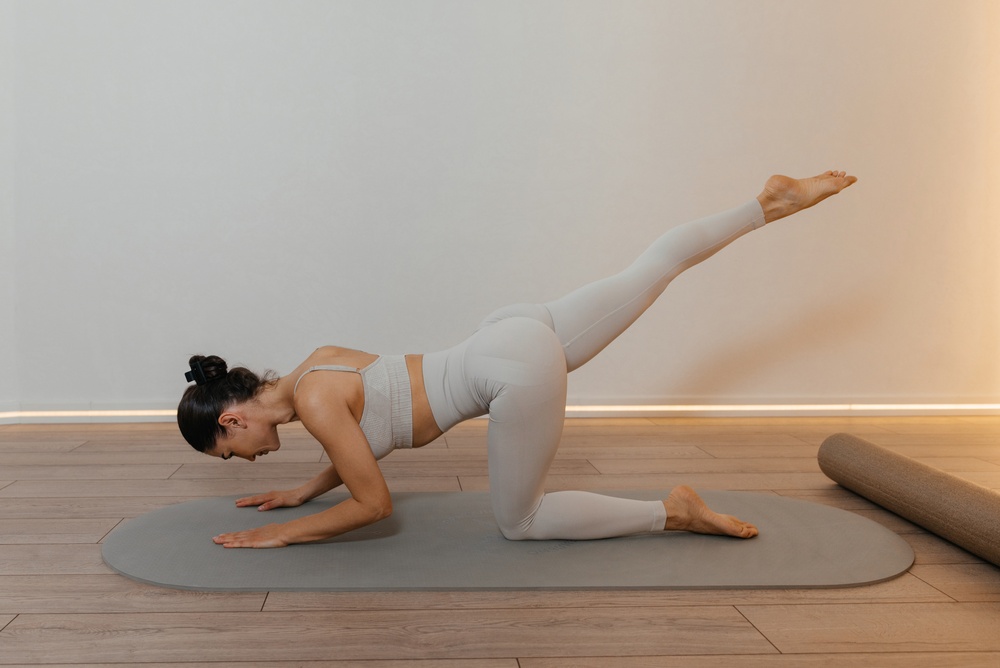
This variation engages the back muscles while testing core stability. From a straight-arm plank, pull one elbow back toward your rib cage, squeezing your upper back muscles. Slowly return the hand to the floor and repeat on the other side. For an added challenge, lift the opposite leg as you row your arm.
12. Plank With Opposite Limb Extension
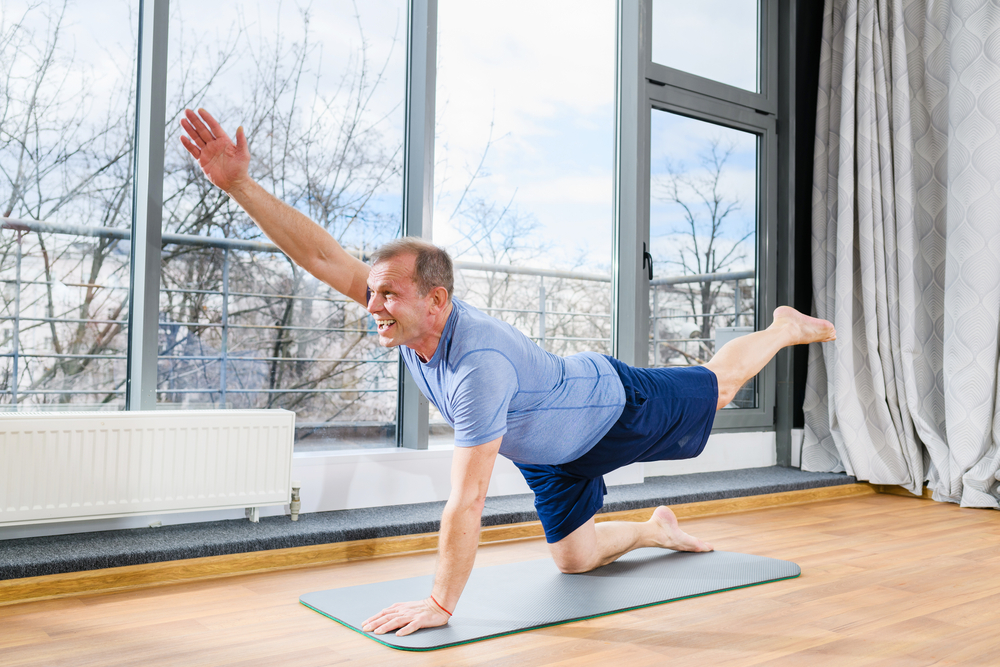
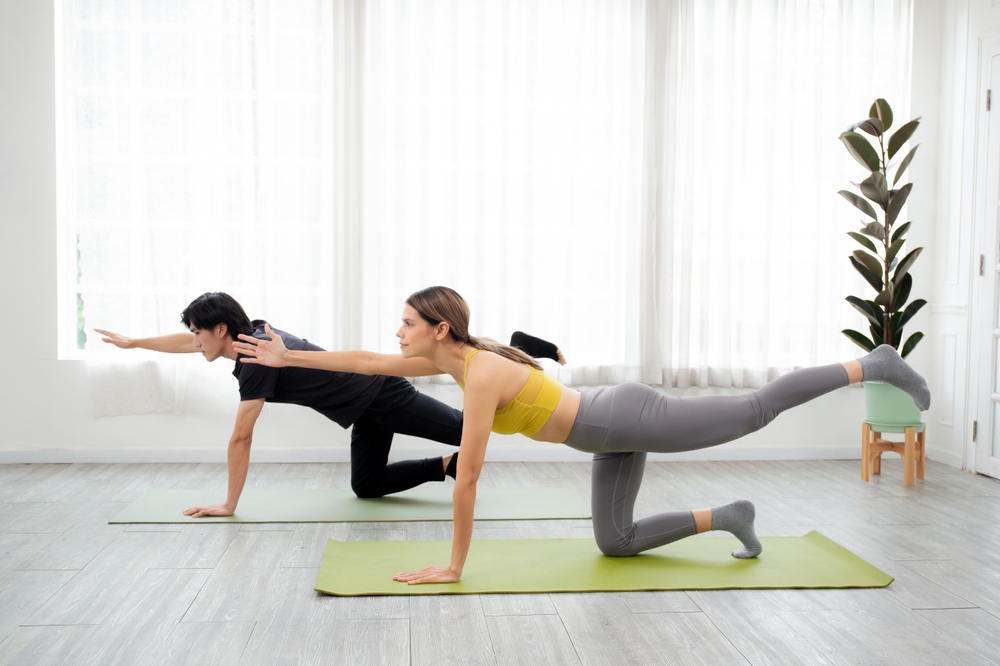
This plank variation improves balance and coordination. Begin in a straight-arm plank and engage your core. Extend one arm and the opposite leg at the same time, then return them to the floor. Alternate sides while keeping your spine straight and hips steady.
13. Push-Up Side Plank
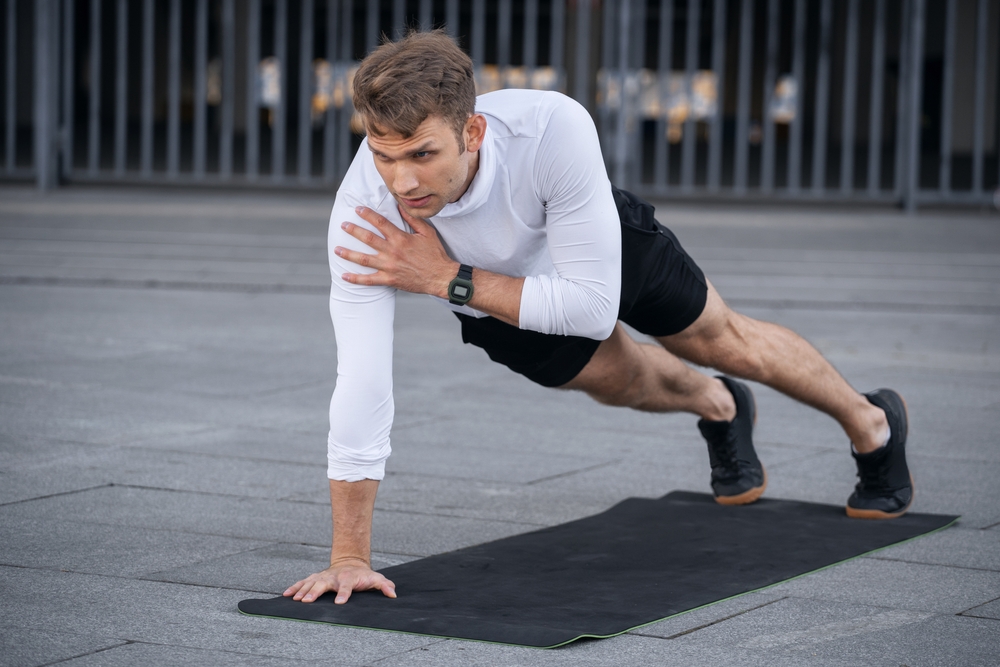
The push-up side plank combines upper-body strength with rotational core work. Start in a push-up position, lower your chest to the floor, and press back up. Rotate your body into a side plank, lifting one arm toward the ceiling. Return to plank, repeat the push-up, and rotate to the opposite side.
14. Side Plank With Inner Thigh Raise
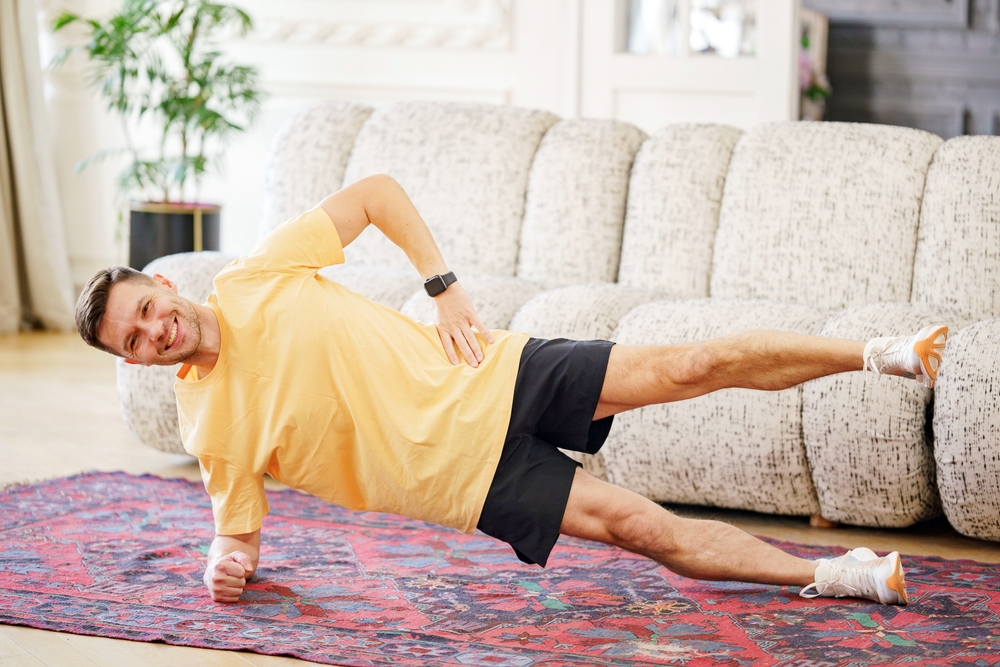
This variation targets the inner thighs along with the obliques. From a side plank position, stagger your feet and lift your bottom leg upward while maintaining balance. Lower the leg with control and repeat before switching sides.
15. Side Plank With Twist
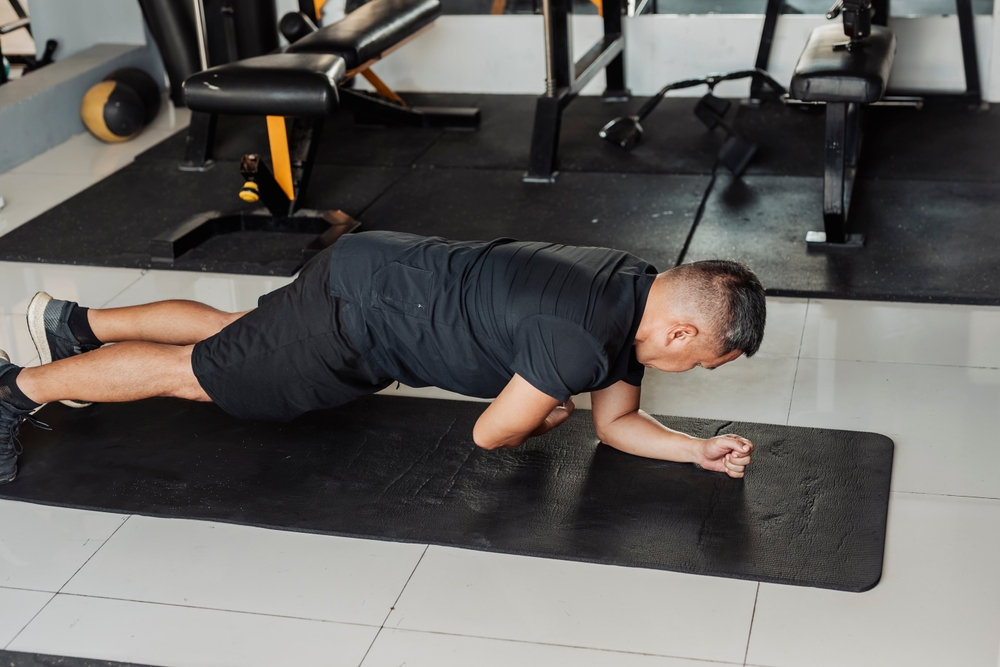
The side plank with twist adds rotational movement to increase core engagement. Begin in a side plank on your forearm and extend your top arm toward the ceiling. Rotate your torso and thread that arm underneath your body, then return to the starting position. Perform controlled repetitions before switching sides.
16. Plank With Side Snatch
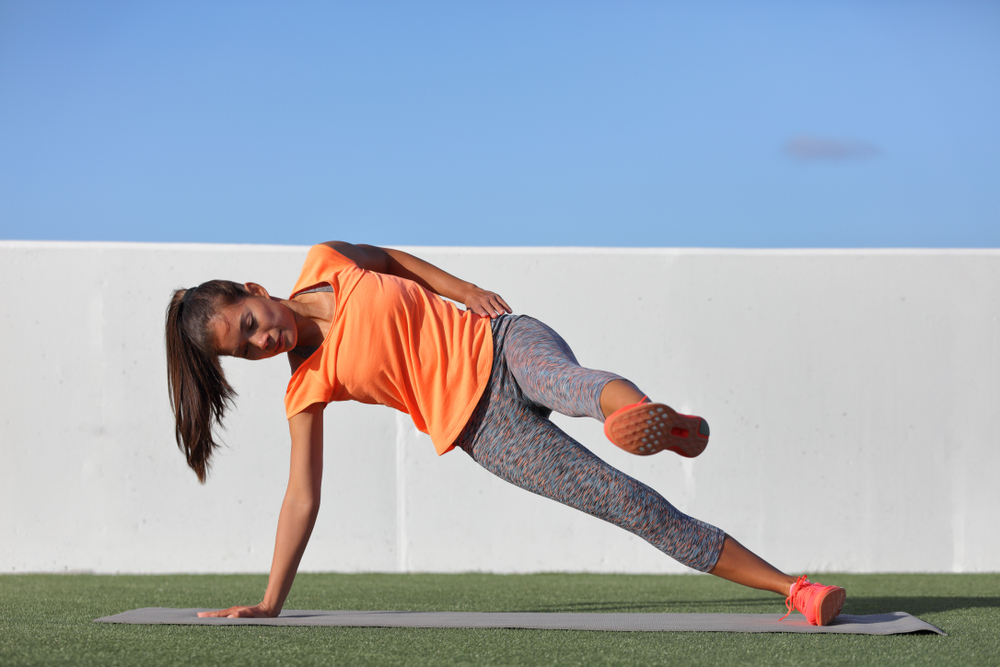
This strength-based plank variation uses dumbbells for added resistance. Start in a straight-arm plank holding dumbbells, with your feet slightly wider for stability. Rotate your body as you lift one arm overhead, forming a T-shape. Lower the weight back down with control and alternate sides.
17. Plank Jacks
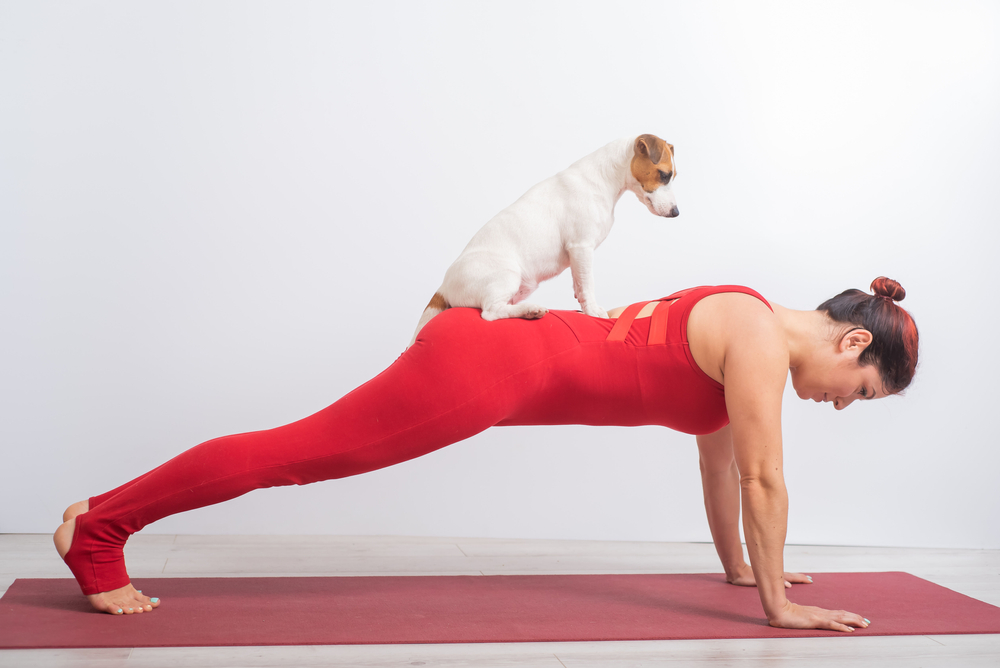
Plank jacks add a cardio element to core training. Begin in a plank position and jump your feet out wide, then back together, similar to a jumping jack motion. Keep your core tight and land softly to maintain control. This move elevates your heart rate while strengthening your abs.
18. On-the-Ball Plank
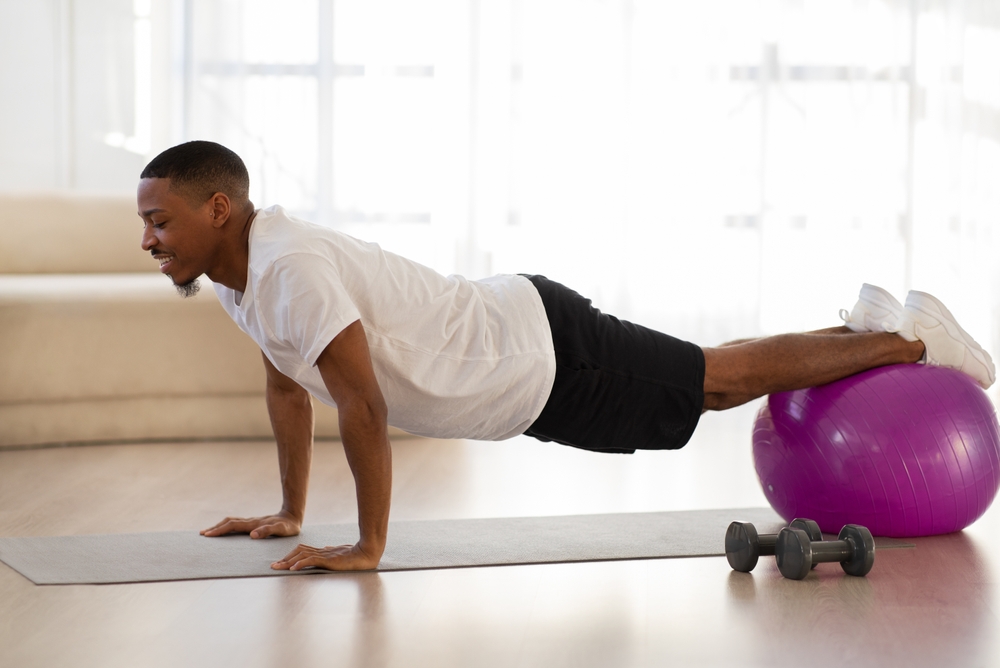
Using a stability ball increases the challenge by adding instability. Place your shins on the ball and your hands on the floor in a plank position. Engage your core and glutes to maintain a straight line from shoulders to heels. Hold the position for time while keeping the ball steady.
19. Stir-the-Pot Plank
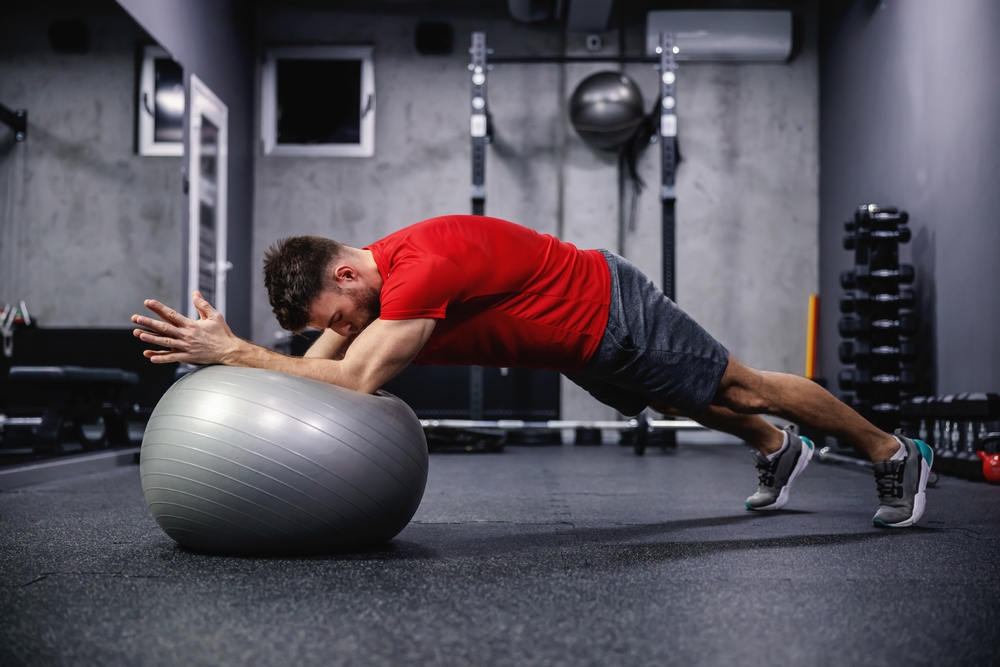
The stir-the-pot plank is an advanced core exercise that demands strong posture. Kneel in front of a stability ball and place your forearms on it. Roll forward into a forearm plank, engage your abs, and make small circular motions with your forearms as if stirring a pot. Switch directions while keeping your hips stable.
Who Should Avoid Planks
While planks are generally safe, they may not be suitable for everyone. Individuals recovering from abdominal surgery, experiencing shoulder or wrist pain, managing certain medical conditions, or dealing with high-risk pregnancies should consult a healthcare professional before performing plank exercises.
Planks may look simple, but their impact is powerful. Focus on proper form, start with variations that suit your fitness level, and gradually build strength over time. With consistency, planks can become one of the most rewarding tools in your fitness routine.
Planks are one of the most effective exercises for building a strong core. A strong core supports better posture, improves balance, and stabilizes your entire body during movement. Increased muscle mass from planking also helps burn more calories at rest and reduces unnecessary stress on your joints.