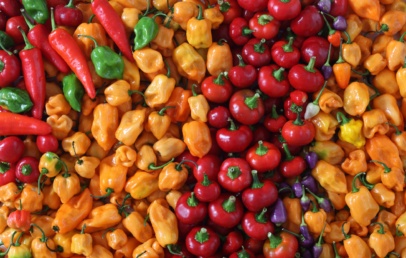

You’re not mistaken if you’ve ever thought that sugar is sneaking into everything you eat. Many common foods have more added sugar than you might think, even though we all know that treats like pastries and soda are obvious sources. Whole foods like fruit and dairy contain natural sugars that are packed with fiber, protein, and nutrients to facilitate your body’s easy processing. However, added sugars enter your body rapidly and cause blood sugar spikes that can lead to type 2 diabetes, insulin resistance, fatty liver disease, and inflammation. Since many processed foods rely on sugar for flavor and texture, most people unknowingly consume more added sugar than the recommended limit of less than 10% of daily calories. These are seven common foods whose high sugar content frequently surprises people.
1. Flavored Yogurt
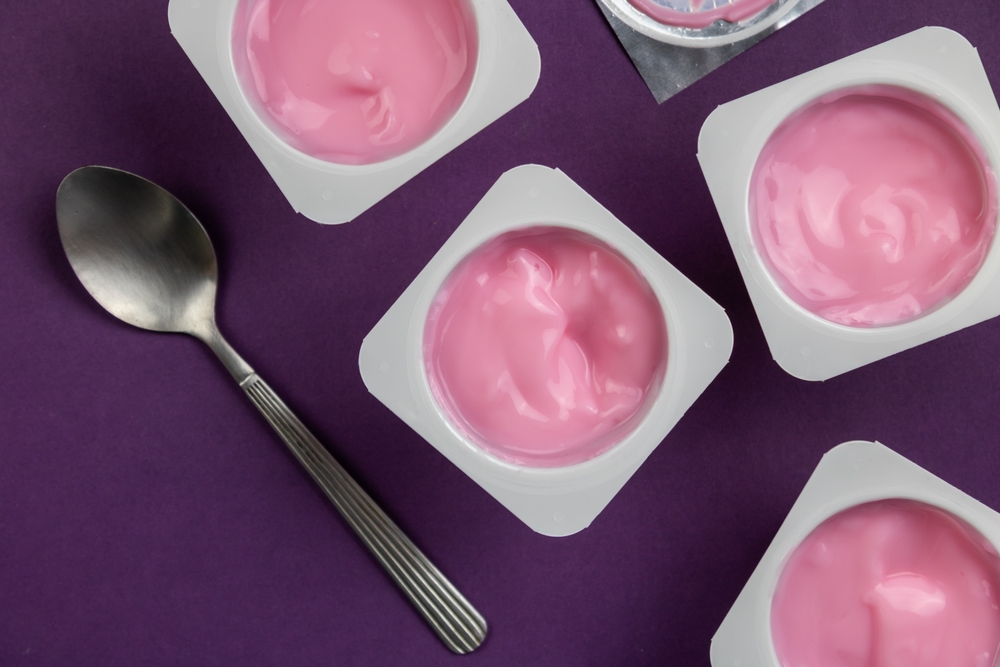
Although flavored yogurt frequently has more added sugar than you might anticipate, yogurt can still be a healthy staple. Sugar is often listed as one of the main ingredients in fruit-on-the-bottom cups and sweetened blends, transforming what appears to be a healthy breakfast into something more akin to dessert. Choosing plain yogurt and flavoring it yourself with healthy ingredients like cinnamon, fresh or mashed berries, unsweetened applesauce, or nuts and seeds—which offer natural sweetness without the overabundance of sugar—is the key.
2. Canned Soup
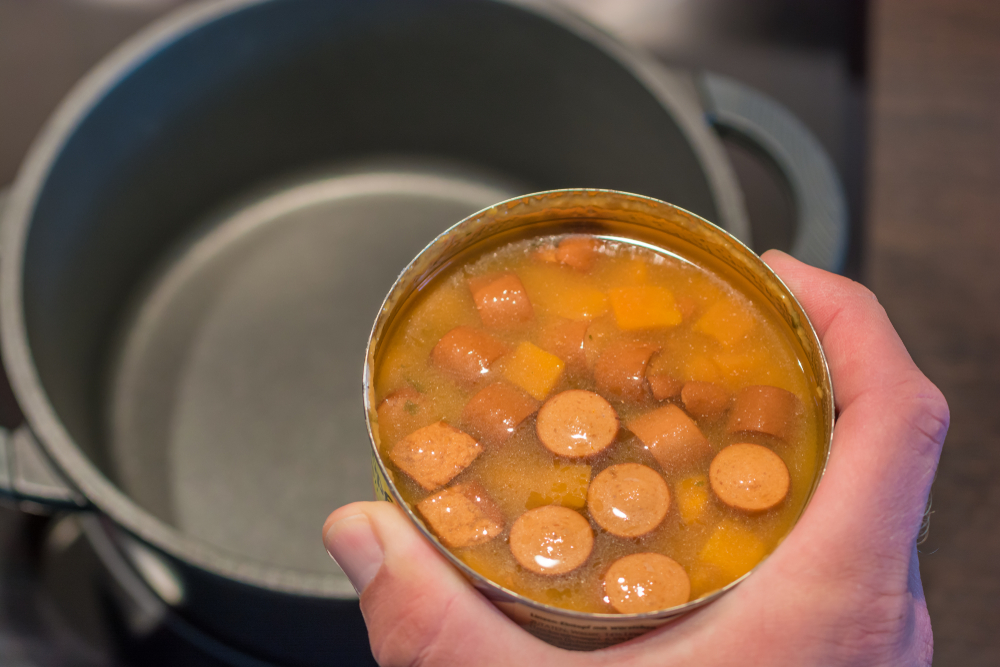
While most people are concerned about sodium in canned soups, sugar can also appear unexpectedly, particularly in tomato-based varieties. To lessen the natural acidity of tomatoes, manufacturers frequently add sugar; some soups have as much as 20 grams per cup. Without you realizing it, this extra sweetness can quickly increase your daily intake. You can have complete control over what goes into your bowl by making your own basic soup at home and carefully reading labels to choose lower-sugar options.
3. Salad Dressing
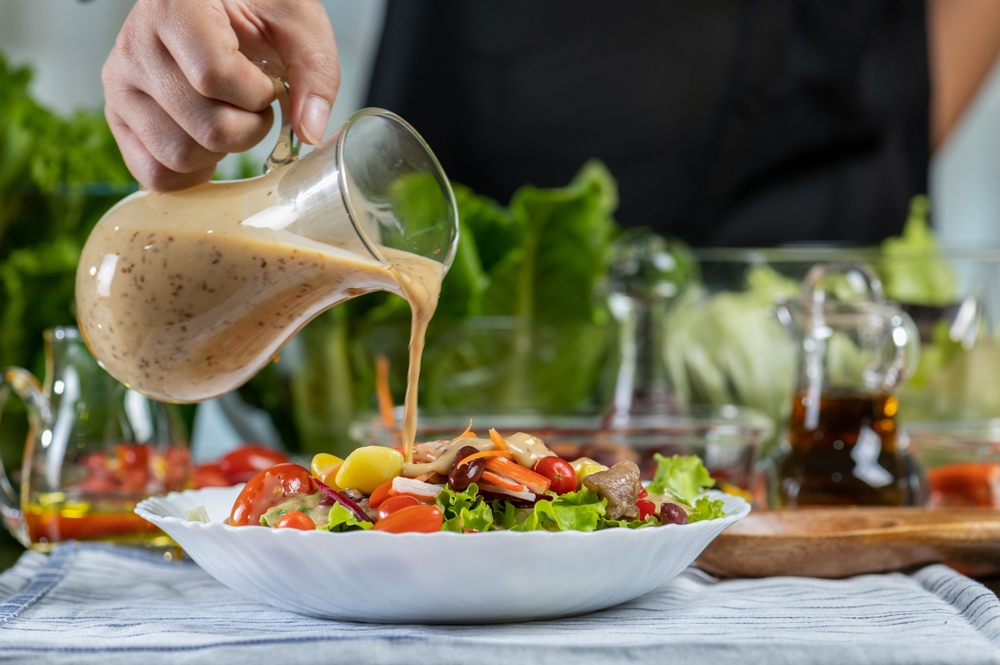
Depending on the dressing you drizzle over a bowl of leafy greens, it can quickly go from being healthy to being heavy. Many bottled dressings sneak in a few grams of sugar per serving; light and fat-free versions frequently have even more because producers add sweetness to make up for flavor loss. Try making a fresh, tasty topping without added sugar by using ingredients like lemon juice, vinegar, hummus, tzatziki, or pureed berries instead of sugar-filled bottled dressings.
4. Tomato Sauce
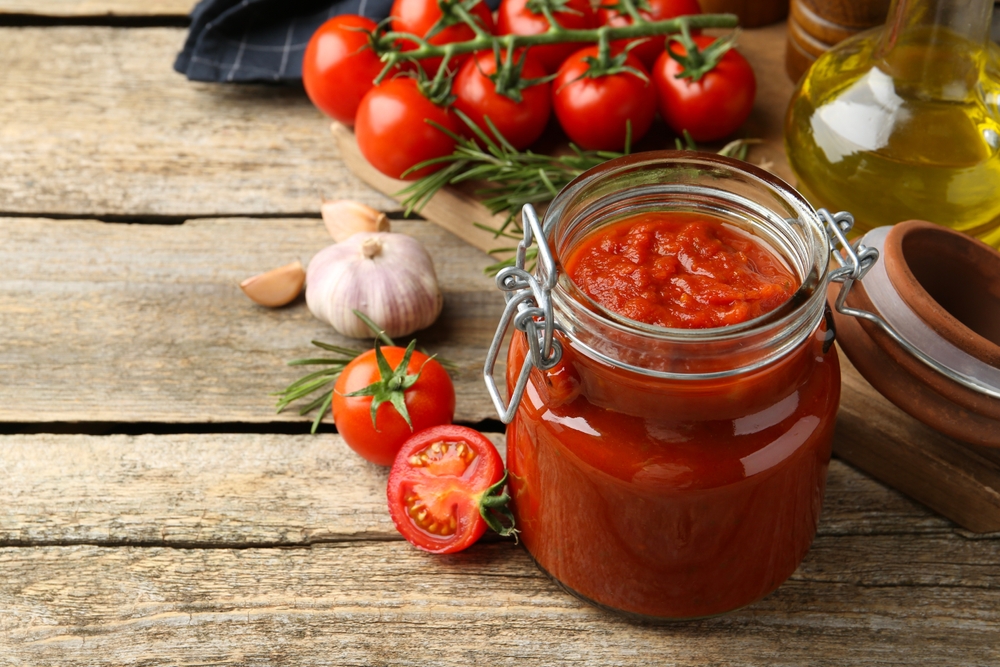
Although jarred tomato sauce is handy, added sugar is frequently concealed in it. To counteract the tanginess of tomatoes and prolong shelf life, many brands sweeten their sauces; some have about 4 grams of added sugar per half-cup serving. Seek out “no added sugar” sauces or make your own by puréeing plain canned tomatoes with garlic and herbs if you’re trying to cut back. Fresh flavors and no unwanted ingredients are common in homemade versions.
5. Fruit Juice
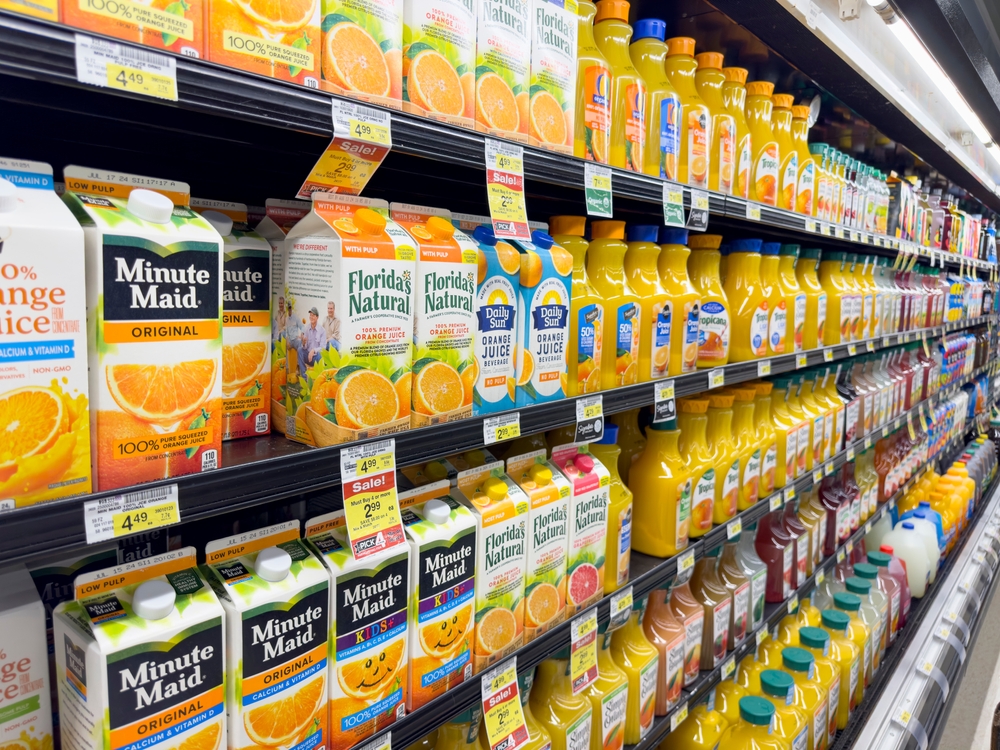
Fruit juice may seem healthier than sugary beverages, but not every bottle is made equally. Many juice drinks are sweetened with added sugars or syrups, making them almost as sweet as soda, even though 100% juice only contains natural sugars from the fruit. To make sure it contains only fruit juice and no additional sweeteners, it is always worthwhile to review the ingredient list. Even better, choose whole fruits whenever you can because they offer fiber, prolong feelings of fullness, and help stabilize blood sugar.
6. Granola and Snack Bars

Although granola bars and snack bars are frequently promoted as healthy options, many of them are actually more like candy bars. Some contain refined flour with minimal nutritional value and at least 10 grams of added sugar per bar. Choose bars that don’t have sugar as one of the top three ingredients or forgo the bars entirely in favor of whole nuts, seeds, or unsweetened dried fruit, which offer natural energy without the sugar boost.
7. Dried Fruit
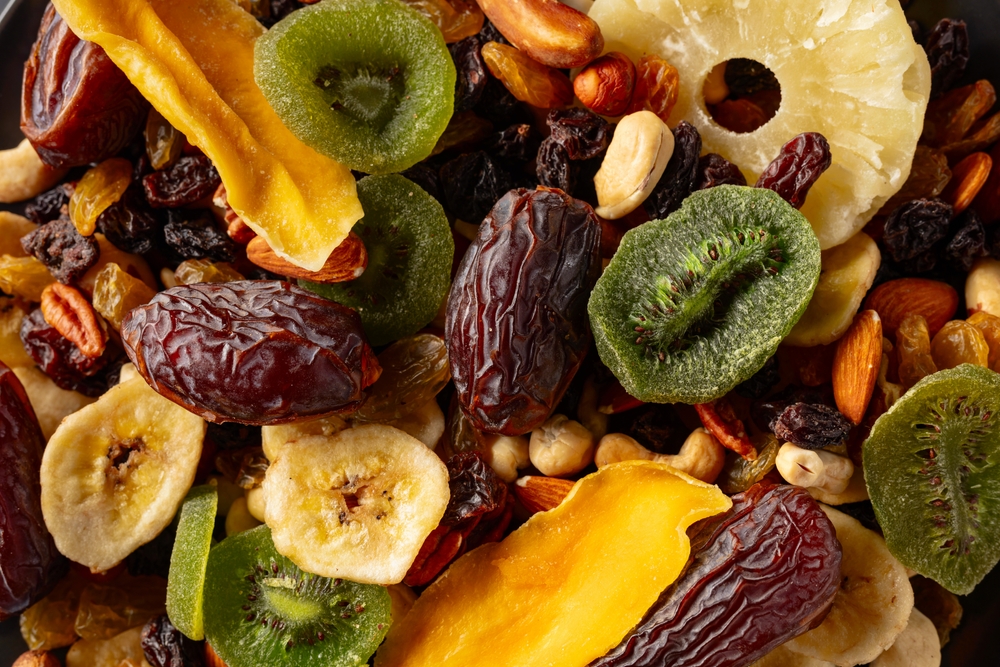
Although dried fruit is associated with health benefits, many types, particularly tart fruits like cranberries, are heavily sweetened during processing. In addition to the natural sugar, a small handful may have almost 30 grams of added sugar. Look for dried fruits with the label “no added sugar” for a better choice, and make sure the ingredients list only contains the fruit. Fruit flavor and nutrients are provided in these unsweetened versions without needless sweetness.
Added sugar hides in far more places than we often realize, especially in processed foods that don’t even taste sweet. You can make better decisions if you know how to read labels and where sugar is likely to be found. You can enjoy your favorite foods without unintentionally consuming a lot of added sugar by making a few thoughtful substitutions. I can help you make a simple cheat sheet or a low-sugar shopping list if you’d like!