Learning how to swim can feel intimidating at first, but it’s one of the most rewarding skills you can ever pick up. Swimming opens the door to fun activities like snorkeling, lap swimming, and water aerobics—and it’s also an important life-saving skill. Surprisingly, millions of adults still don’t know how to swim, but the good news is this: it’s never too late to learn, and you don’t need formal lessons to get started.
With a little patience, the right approach, and a safe environment, you can begin learning to swim on your own. Below are five beginner-friendly steps to help you build confidence and develop the basics of swimming—one splash at a time.
Step 1: Get Comfortable in the Shallow End
Before swimming comes comfort. Start in the shallow end of a pool where you can stand easily. This allows you to relax and focus without worrying about depth.
Begin by practicing breathing. Take a deep breath above water, then gently lower your face into the water and exhale slowly by blowing bubbles. Lift your head back up once you’re done. Repeat until it feels natural.
Once you’re comfortable, try side breathing. Take a breath, put your face in the water, and then turn your head slightly to the side to inhale again. This skill is essential later when you start swimming forward.
Step 2: Learn How to Float
Floating is the foundation of swimming. If you can float, you’re already halfway there.
Start with a front float in the shallow end. Hold onto the pool edge, stretch your body out, and allow your hips and legs to rise toward the surface. Keep your body straight and relaxed. Using a pool noodle under your hips or legs can make this much easier at first.
If floating on your stomach feels uncomfortable, try a back float instead. Hold the pool edge, lean back, and let the water support you. As your confidence grows, you can transition to floating on your front.
Step 3: Practice Your Kick
Your legs play a big role in swimming, even though many people think it’s all about the arms.
While floating and holding the pool edge, begin kicking your legs gently. Keep your knees loose and kick from your hips and glutes, not your knees. The movement should be small, quick, and just below the water’s surface—think fluttering, not stomping.
As you kick, practice breathing: exhale underwater and turn your head to inhale. This helps your body get used to coordinating movement and breathing.
Step 4: Add Arm Movements
Now it’s time to bring in your arms using the front crawl (freestyle) motion.
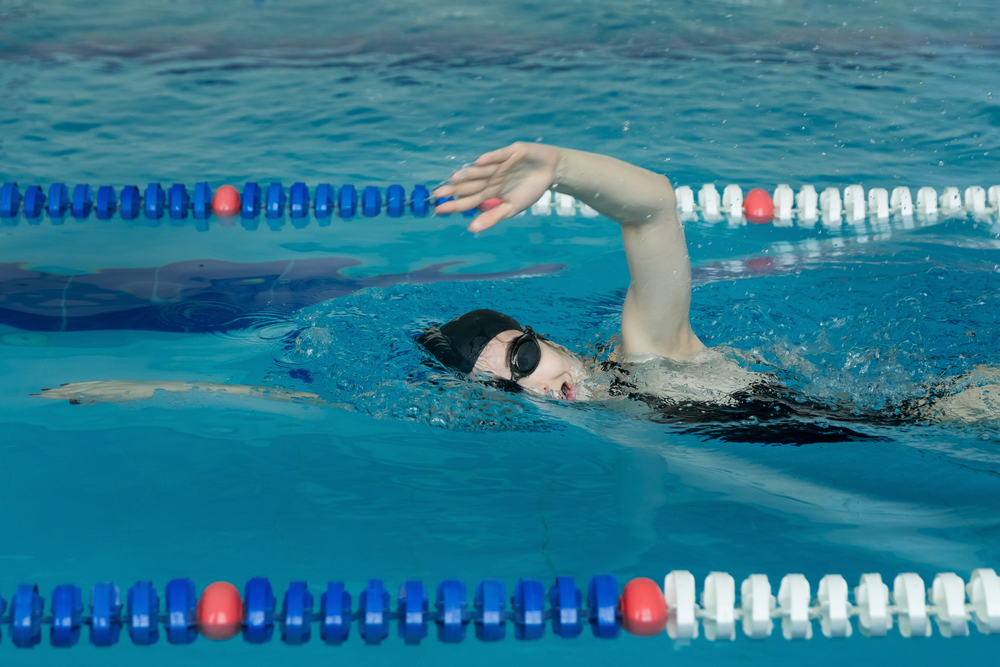
Stand in the shallow end, arms stretched out in front of you. Take a breath and place your face in the water. Pull one arm down through the water, sweeping it past your hip with your palm pushing backward. As that arm pulls, turn your head to the same side to breathe.
Lift your arm out of the water with a relaxed elbow, reach forward again, and repeat with the other arm. Try both sides and see which breathing side feels more natural.
Step 5: Put It All Together and Keep Practicing
When you feel comfortable with floating, kicking, breathing, and arm movements individually, it’s time to combine them.
Face away from the pool wall, push off gently, and begin kicking right away. Add your arm strokes and side breathing in a steady rhythm. Don’t rush—focus on staying relaxed and controlled.
Your first goal can simply be swimming across the width of the pool without stopping. Stick to areas where you feel safe and avoid deep water until your confidence improves.
A Simple Drill to Build Skills
As you progress, drills can help refine your technique. One helpful option is practicing near the pool wall. Hold onto the wall, place your face in the water, and float your legs behind you. You can focus solely on kicking or practice arm pulls one at a time. This removes the pressure of moving forward and helps you fine-tune your form.
Later, you can switch the wall for a kickboard to practice moving forward while staying supported.
Helpful Swim Gear for Beginners
The right gear can make learning easier and more enjoyable:
-
Kickboards help you focus on leg strength and balance.
-
Pull buoys keep your legs afloat so you can concentrate on arm strokes and breathing.
-
Swim snorkels let you breathe without turning your head, making coordination simpler.
-
Swim fins enhance your kick and help you feel how power should come from your hips, not your knees.
These tools are great for practice, but remember—they’re helpers, not crutches.
Learning to swim on your own is absolutely possible with patience, consistency, and a safe environment. Take it step by step, always practice when you’re well-rested, and make sure a lifeguard is present. Progress may feel slow at times, but every small improvement adds up.
Before you know it, you’ll be gliding through the water with confidence—and wondering why you didn’t start sooner.